Tendon Injuries & Tendinopathy Care
Restoring tendon capacity, stimulating collagen remodeling, and overcoming chronic tendinopathy with evidence-based load protocols in Swabi.
Understanding the tendinopathy continuum and collagen remodeling
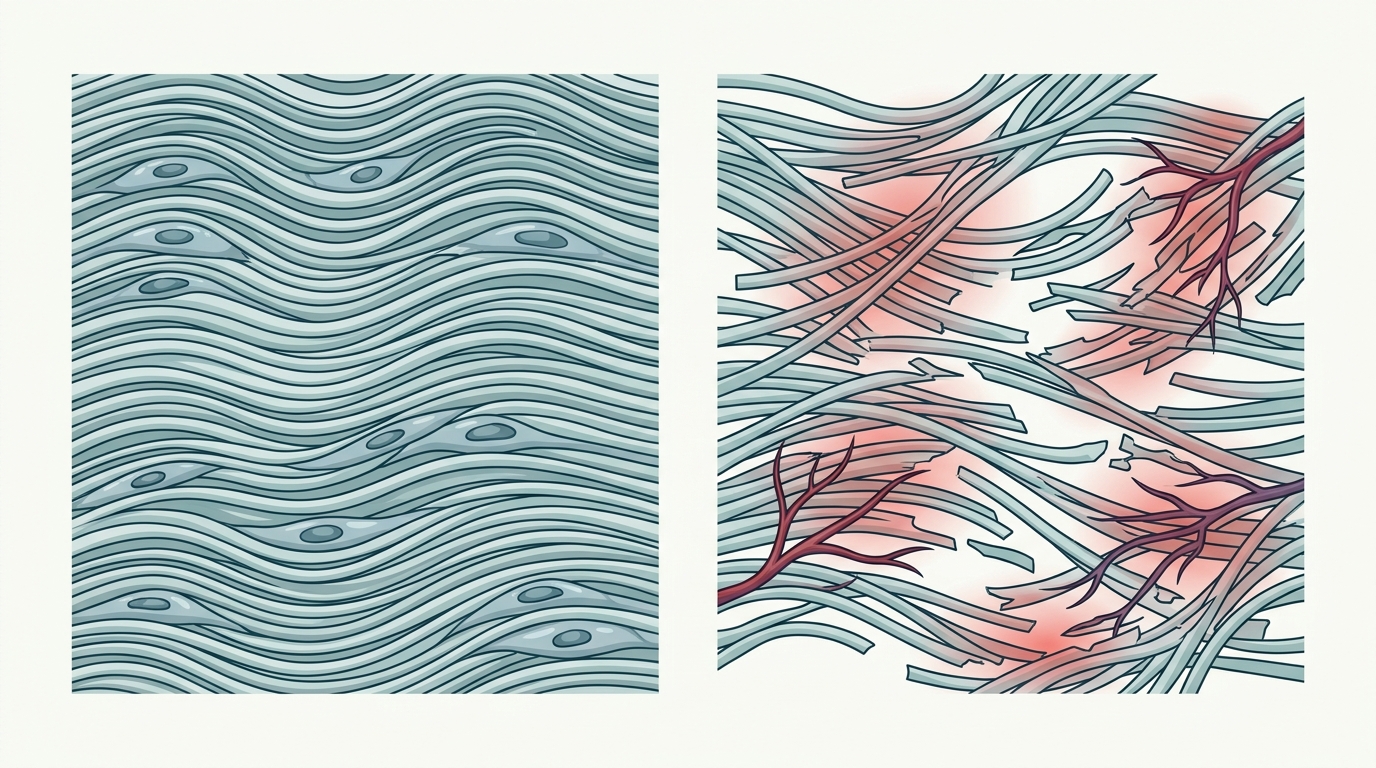
Tendon pathology exists along a clinical continuum defined by Cook & Purdam: ranging from Reactive Tendinopathy (acute non-inflammatory response to sudden volume spikes) to Tendon Dysrepair (widespread matrix disruption) and Degenerative Tendinopathy (focal cell death and permanent collagen separation).
In healthy tendons, tightly packed type I collagen fibrils efficiently transmit tensile energy. When load exceeds capacity, tenocytes produce disorganized proteoglycans and type III collagen, leading to tissue thickening, localized neurovascular ingrowth, and heightened mechanical sensitivity.
Complete immobilization causes further tendon disuse atrophy and weakens healthy adjacent fascicles. Tendons require precise mechanical loading—neither too little nor too abrupt—to stimulate tenocyte mechanotransduction and build tensile load capacity.
Hallmark clinical signs of tendon overload
Localized Tendon Pain
Pinpoint, well-demarcated tenderness directly over the tendon midportion or its bony insertion point that worsens with tensile loading.
Morning Tendon Stiffness
Marked stiffness and sluggishness upon waking, taking several minutes of gentle walking or movement to warm up.
The Warm-Up Phenomenon
Pain that diminishes during the middle of exercise as the tendon warms up, followed by a severe throbbing ache 24 hours later.
Palpable Tendon Thickening
Nodular, spindle-shaped thickening or palpable firmness along the tendon body compared to the unaffected contralateral side.
When to seek urgent medical evaluation (Red Flags)
Seek immediate emergency surgical/medical consultation if you experience: sudden sensation of being kicked or struck from behind followed by an audible snap and immediate loss of push-off or knee extension (acute full-thickness Achilles or patellar tendon rupture); rapid swelling with spreading redness, warmth, and systemic chills/fever (acute infectious tenosynovitis); or bilateral sudden tendon pain following fluoroquinolone antibiotic use.
Targeted loading protocols to stimulate tendon capacity
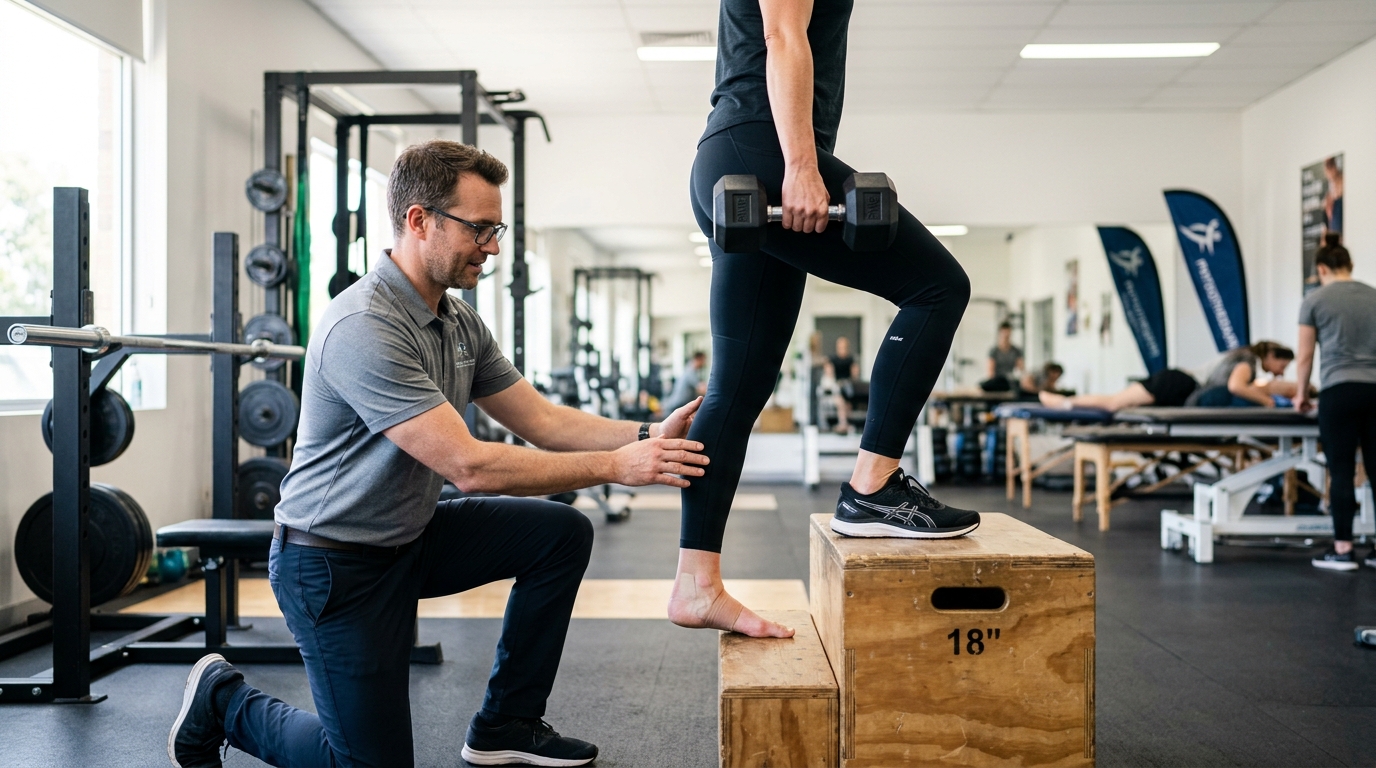
Phase 1: Analgesic Isometric Loading: For high-irritability tendinopathy, sustained heavy isometric holds (45 seconds, 5 repetitions at 70% maximum voluntary contraction) release cortical inhibition and induce immediate, sustained pain relief without irritating compressive interfaces.
Phase 2: Heavy Slow Resistance (HSR): We progress to controlled isotonic exercise (3 seconds concentric, 3 seconds eccentric) with high mechanical loads. HSR stimulates tenocytes to synthesize new type I collagen fibrils and improves muscular strength across the attached muscle belly.
Phase 3: Energy Storage & Stretch-Shortening Cycle: Once the tendon tolerates heavy loads pain-free, we systematically reintroduce rapid elastic loading (jumping, bounding, deceleration drills) to restore sport-specific spring capacity.
What to expect during tendinopathy rehabilitation
Phased Recovery Roadmap
Weeks 1–3 (Pain Settling): High-load isometric holds, training volume modification, and cessation of provocative fast spring activities.
Weeks 4–10 (Tendon Remodeling): Progressive Heavy Slow Resistance (HSR) protocol, building muscle volume and tensile tendon tolerance.
Weeks 10–20+ (Elastic Return): Controlled reintroduction of jumping, hopping, sprinting drills, and full return to athletic performance.
Why does complete rest not cure tendon pain?
Tendons are living mechanical structures that require regular tensile load to stimulate cellular turnover. Complete rest leads to disuse atrophy and weakens the tendon further, meaning pain immediately returns as soon as normal activities resume.
Which tendons are most commonly affected?
The most common sites of tendinopathy are the Achilles tendon, patellar tendon (jumper’s knee), rotator cuff tendons (supraspinatus), common extensor elbow tendon (tennis elbow), and gluteal tendons (greater trochanteric pain syndrome).
How long does chronic tendinopathy take to resolve?
Because tendon tissue has a lower vascular metabolic rate than skeletal muscle, collagen remodeling takes time. Measurable pain relief occurs within 4 to 6 weeks, while structural remodeling and full capacity typically develop over 12 to 24 weeks.
Related sports & musculoskeletal conditions
Heel Pain & Plantar Fasciitis
Plantar fascia loading protocols and arch restoration.
Rebuild High-Capacity, Pain-Free Tendons
Book an expert tendon assessment with Dr. Waheed Muhammad in Swabi. We structure individualized heavy slow resistance and progressive load protocols.