Cerebral Palsy Pediatric & Functional Care
Specialized pediatric physical therapy, spasticity management, and developmental mobility retraining with Dr. Waheed Muhammad in Swabi.
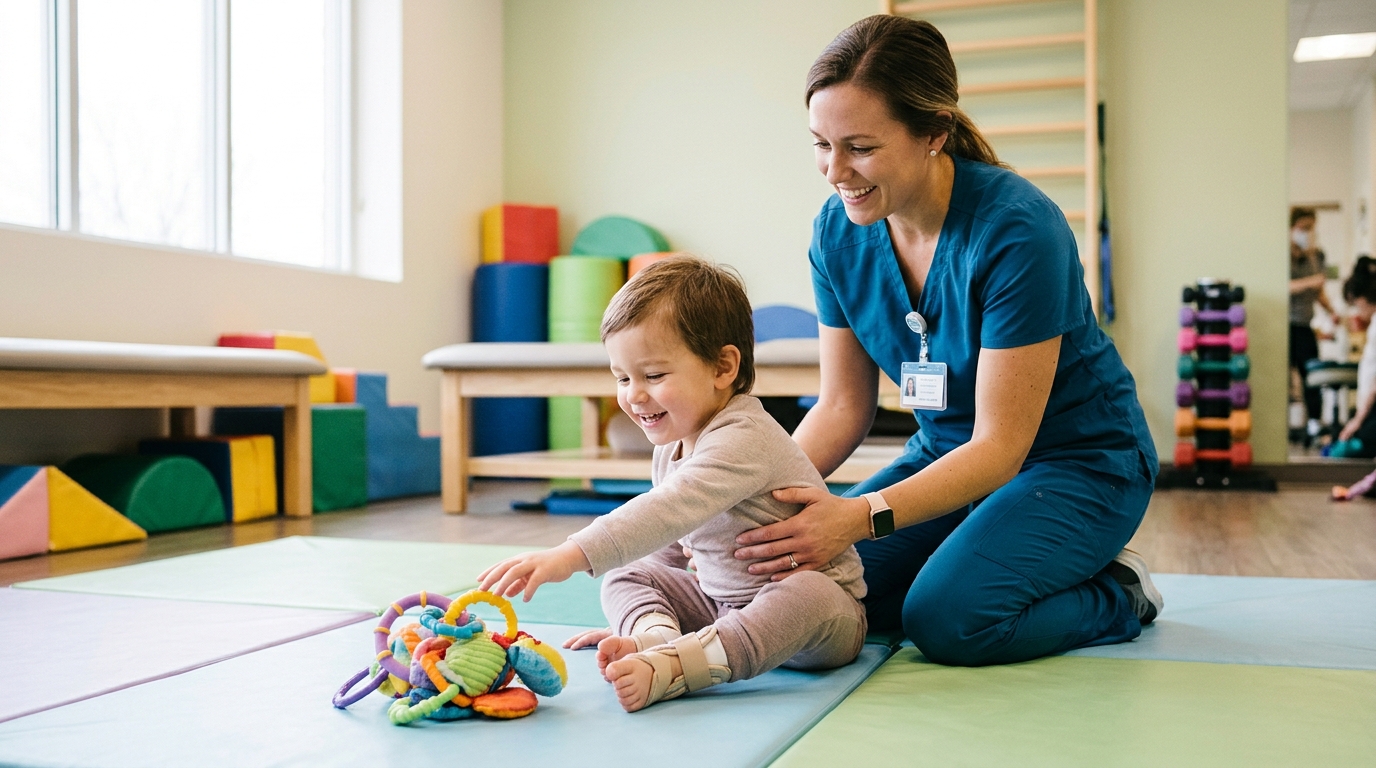
Understanding cerebral palsy motor types, GMFCS classification, and development
Cerebral palsy (CP) is a non-progressive permanent disorder of movement and posture resulting from a non-progressive injury to the developing infant brain. It presents across spastic (most common), dyskinetic, ataxic, or mixed forms, affecting unilateral limbs (hemiplegia) or bilateral limbs (diplegia, quadriplegia).
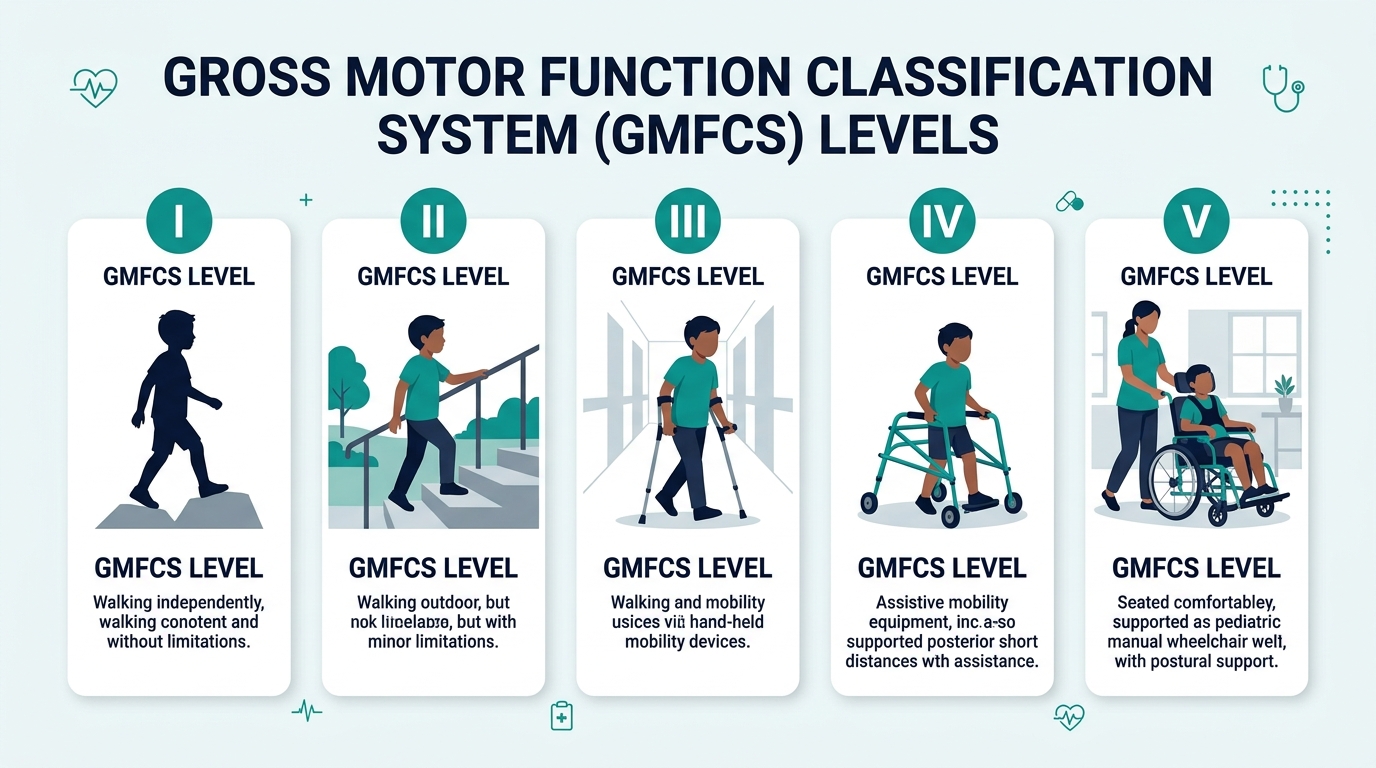
Functional mobility is categorized internationally using the Gross Motor Function Classification System (GMFCS), spanning Levels I (walks without limitations) through Level V (transported in a manual wheelchair). While the initial neurological brain injury does not worsen, secondary musculoskeletal complications—such as muscle-tendon shortening, joint contractures, bony torsions, and hip displacement—inevitably progress without structured therapy.
Modern evidence-based pediatric physiotherapy prioritizes goal-directed functional training, active child engagement through play, orthotic management, and family empowerment to optimize participation in everyday life.
Key indicators and functional symptoms
Spastic Hypertonia & Muscle Stiffness
Velocity-dependent increase in muscle tone and hyperreflexia, creating resistance during dressing, bathing, and movement.
Delayed Gross Motor Milestones
Difficulty achieving head control, independent sitting, crawling, or standing within standard developmental windows.
Atypical Gait Mechanics
Toe-walking, true equinus, crouch gait, or scissoring leg alignment resulting from hamstring and adductor spasticity.
Persistent Primitive Reflexes
Retention of infantile reflexes (such as ATNR) that interfere with voluntary reach, grasp, and postural transitions.
When to seek urgent medical evaluation (Red Flags)
Seek prompt pediatric orthopedic consultation if you identify: progressive hip migration or persistent groin pain during diapering (warning sign of silent hip subluxation/dislocation in non-ambulant children); rapid onset of progressive spinal deformity (neuromuscular scoliosis); sudden loss of previously acquired motor skills; or skin breakdown and pressure sores under orthotic braces (AFOs).
Evidence-based pediatric rehabilitation protocols for cerebral palsy
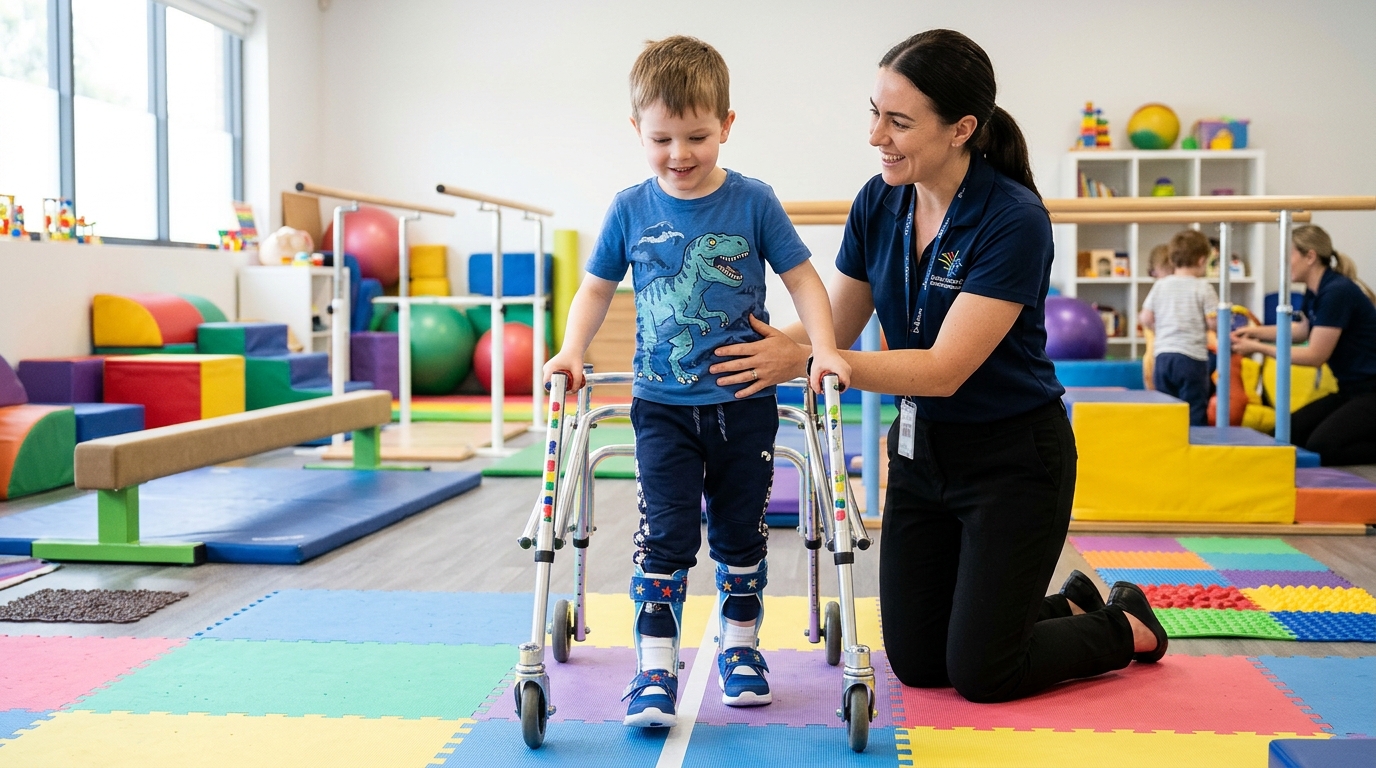
Phase 1: Contracture Prevention & Postural Positioning: We prescribe prolonged static stretching through standing frames, nocturnal splinting, and customized Ankle-Foot Orthoses (AFOs) to maintain muscle length and preserve joint alignment.
Phase 2: Goal-Directed Functional Training (GDT): Children practice meaningful real-world tasks (sit-to-stand, stair stepping, floor transfers) embedded in engaging play, stimulating motor learning and cortical neuroplasticity.
Phase 3: Gait & Assisted Mobility Re-education: We utilize body-weight supported treadmill training, reverse posture walkers, and adaptive trikes to build cardiovascular endurance, bone mineral density, and independent mobility.
What to expect during rehabilitation
Developmental Pediatric Roadmap
Early Intervention (0–3 Years): Postural symmetry, head and trunk control, family handling coaching, and early sensory-motor exploration.
School-Age Mobility (4–12 Years): Gait efficiency, orthotic optimization, stair and playground mobility, and hip surveillance.
Adolescence & Transition (13+ Years): Energy-efficient independent living, vocational mobility, adaptive fitness, and musculoskeletal maintenance.
Does cerebral palsy get worse as a child grows?
The brain lesion itself never worsens. However, as the child’s bones grow rapidly, spastic muscles may fail to elongate at the same rate, causing contractures and joint stiffness if physical therapy is not maintained.
How do Ankle-Foot Orthoses (AFOs) help my child?
Custom AFOs align the foot and ankle, prevent equinus (toe-walking), stabilize knee position during weight-bearing, and provide a stable base of support for stepping and standing.
Why is play-based therapy emphasized over passive stretching?
Neuroscience shows that neuroplastic motor learning occurs when children are actively motivated, engaged, and attempting meaningful movements themselves rather than receiving purely passive movements.
Related clinical rehabilitation care
Posture & Movement Problems
Biomechanical alignment, core stability, and movement pacing.
Amputation Rehabilitation
Pediatric limb differences and comprehensive mobility care.
Empower Your Child's Mobility & Functional Independence
Schedule a compassionate pediatric evaluation with Dr. Waheed Muhammad in Swabi. We design personalized, family-centered rehabilitation plans.