Doctors Medical Center, Jahangira Road, SwabiSwabi, KPK
Mon – Sat: 3:00 PM – 7:30 PM
|
CONDITIONS / BALANCE & MOBILITY PROBLEMS

Balance & Mobility Problems

Comprehensive fall prevention, gait re-education, and sensory balance rehabilitation to restore walking confidence and independence in Swabi.
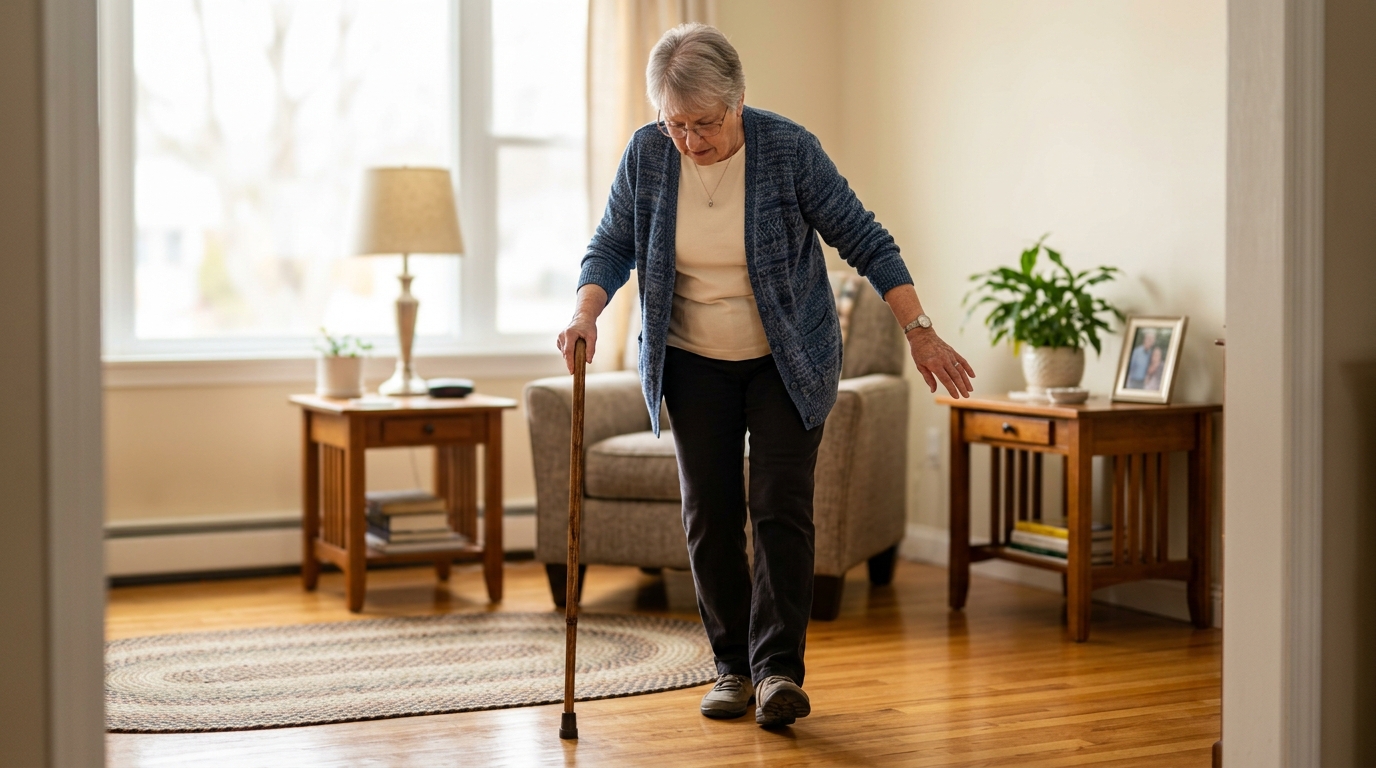
Older adult woman practicing cautious gait and balance steadying during fall prevention mobility routine
01 · UNDERSTAND THE CONDITION

How the body maintains equilibrium

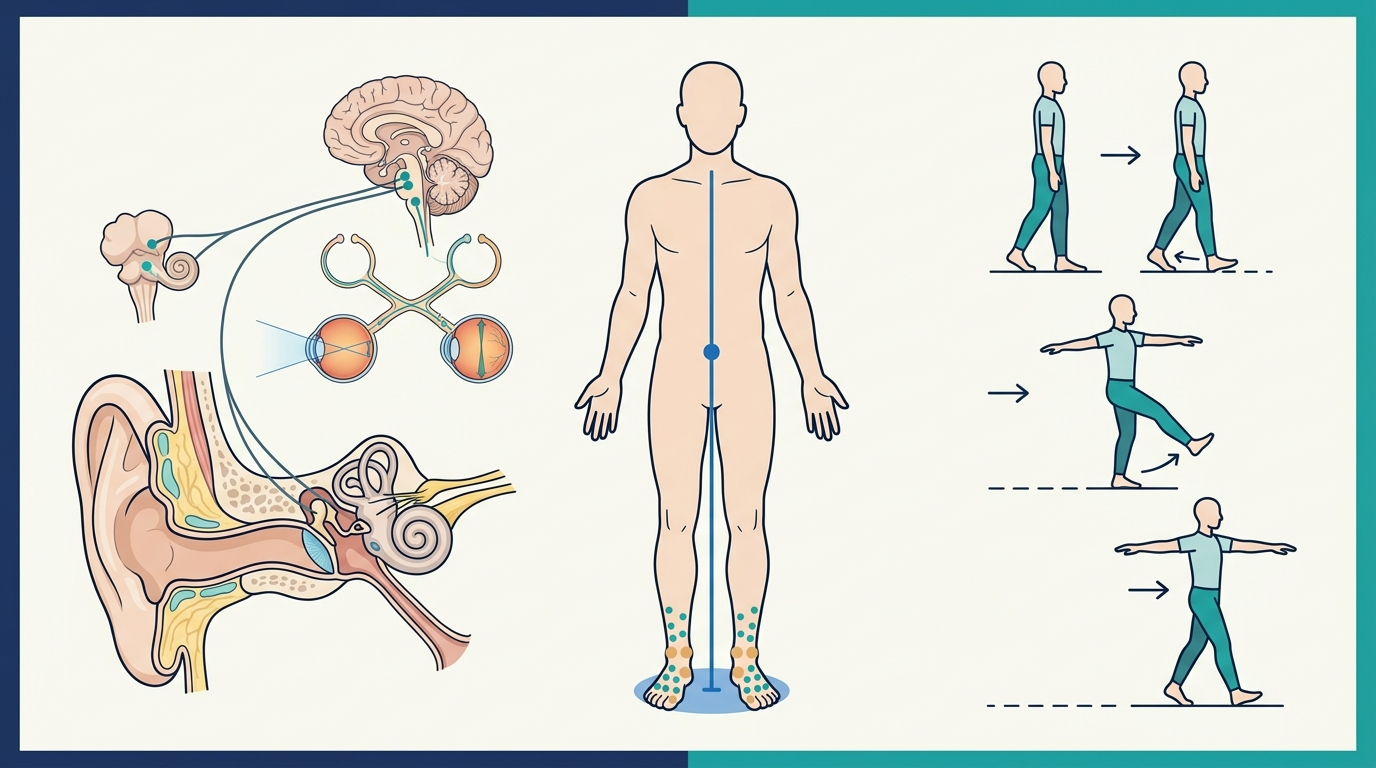
Medical infographic illustrating vestibular, visual, and proprioceptive balance systems and stability exercises
Sensory balance triad (vestibular, visual, and somatosensory) & postural stability

Human balance is a complex neurological process relying on three distinct sensory systems: the vestibular apparatus in the inner ear, visual feedback, and somatosensory proprioceptors located in joints, ligaments, and the soles of the feet.

Information from these three streams is coordinated continuously by the brainstem and cerebellum to generate rapid corrective muscular adjustments. When any of these systems weaken—due to normal aging, neuropathy, inner-ear dysfunction, joint arthritis, or muscle deconditioning—the body struggles to keep its center of gravity over its base of support.

Targeted balance retraining stimulates “sensory re-weighting,” teaching the central nervous system to compensate effectively and dramatically reducing fall risk.

02 · RECOGNIZE THE SYMPTOMS

Signs of impaired balance & mobility

• Unsteadiness, swaying, or difficulty walking in a straight line
• Hesitant or shuffling gait when turning or stepping over curbs
• Heightened fear of falling leading to reduced physical activity
• Needing to hold furniture or walls for stability at home
⚠️ When to seek urgent medical evaluation

Most balance issues improve through physical therapy, but prompt medical evaluation is essential if unsteadiness is accompanied by:

  • Acute neurological symptoms: Sudden severe vertigo with double vision, slurred speech, facial numbness, or unilateral arm/leg weakness.
  • Recurrent syncope (fainting): Sudden blackouts or loss of consciousness without warning, requiring cardiovascular evaluation.
  • Post-fall trauma: Inability to bear weight, severe hip or back pain, or head impact following a fall.
03 · ASSESSMENT & REHABILITATION

A personalized fall prevention program
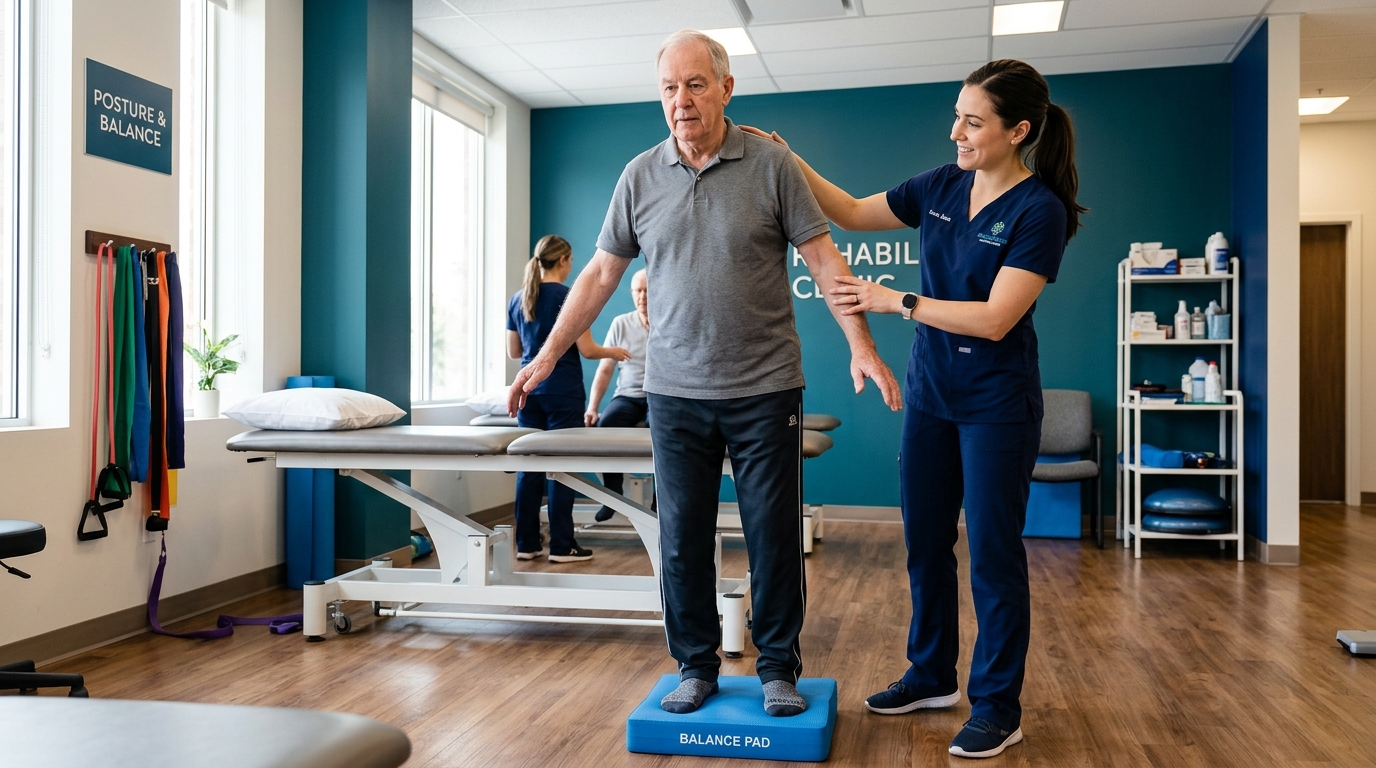
Older adult patient practicing standing balance and sensory re-weighting on a compliant foam pad with physical therapist
Sensory re-weighting & dynamic perturbation training on compliant surfaces

At Dr Waheed Physio, clinical balance evaluation is conducted by Dr. Waheed Muhammad, Consultant Physical Therapist at DHQ Teaching Hospital Swabi. Assessment includes standardized clinical tests (Timed Up and Go, Berg Balance Scale), gait kinematics, vestibular screening, and lower-limb power testing.

Stage 1: Static Stability & Sensory Re-weighting Progressive narrowing of base of support (tandem and single-leg stance), eyes-open versus eyes-closed retraining, and ankle proprioception exercises to steady standing posture.
Stage 2: Dynamic Equilibrium & Perturbation Control Compliant foam pad training, weight shifts, obstacle stepping, and rapid stepping reactions to restore automatic equilibrium when balance is challenged.
Stage 3: Functional Mobility & Environmental Confidence Dual-task walking drills, uneven outdoor surface simulation, stair navigation, assistive device optimization, and home hazard counseling for secure independence.
04 · RECOVERY & FAQS

What to expect from balance rehabilitation

Balance is a dynamic physiological skill that responds directly to targeted training. Clinical trials consistently show that older adults and individuals with mobility impairments achieve significant reductions in fall risk and notable improvements in walking confidence within 4 to 8 weeks of structured balance and strength exercises. Maintaining these benefits requires ongoing light daily movement and continued adherence to home exercises.

Are balance problems an inevitable consequence of aging? No. While sensory acuity and muscle mass naturally decline over time, unsteadiness is largely reversible through targeted physical therapy. Regular vestibular, proprioceptive, and strength exercises reliably restore stability and prevent debilitating falls at any age.
When should an older adult consider using a walking aid? A walking cane or walker is beneficial when unsteadiness causes hesitation, fatigue, or near-falls. A physical therapist ensures correct height measurement, selects the appropriate device type, and provides gait training so the aid increases safety rather than becoming a trip hazard.
What simple steps can be taken at home to prevent falls? Key home safety steps include removing unsecured throw rugs, ensuring bright lighting in stairwells and hallways, placing non-slip mats and grab bars in bathrooms, wearing supportive footwear, and keeping main walking pathways clear of clutter and electrical cords.
RELATED CONDITIONS

Explore related mobility, balance and joint conditions

FALL PREVENTION & MOBILITY IN SWABI

Schedule an expert balance and mobility assessment

Consult Dr. Waheed Muhammad, Consultant Physical Therapist at DHQ Teaching Hospital Swabi. Private consultations held at Doctors Medical Center, Jahangira Road, Swabi (3:00 PM – 7:30 PM, Monday to Saturday).