Shoulder Pain & Rotator Cuff Care
Relieving impingement, restoring pain-free overhead reach, and stabilizing the rotator cuff and scapular complex through targeted physiotherapy in Swabi.

What causes shoulder pain and impingement?
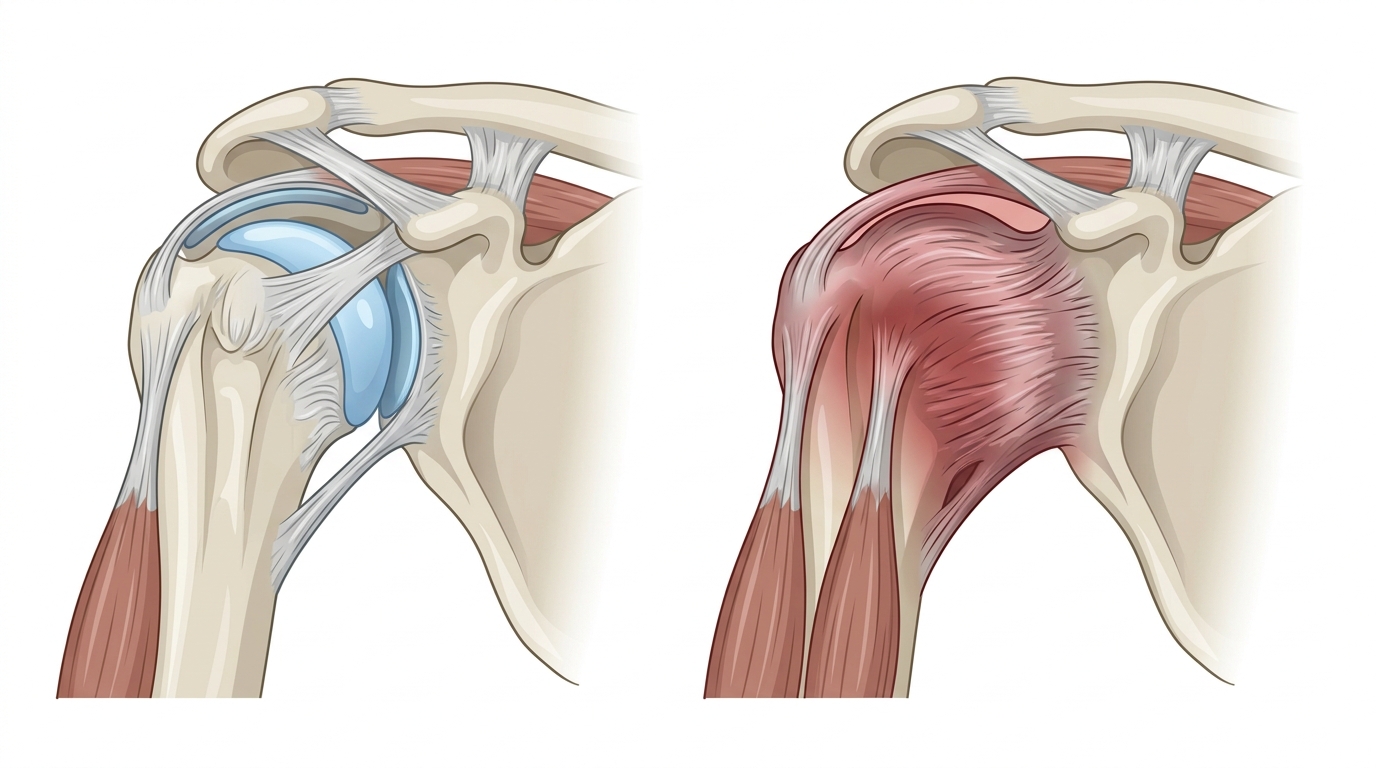
The shoulder is the most mobile joint in the human body, sacrificing skeletal stability for exceptional multi-planar movement. This extensive mobility relies entirely on the dynamic stability provided by the four rotator cuff tendons (supraspinatus, infraspinatus, teres minor, subscapularis) and the coordinated upward rotation of the scapula (shoulder blade).
Shoulder pain most commonly stems from subacromial impingement syndrome, rotator cuff tendinopathy, partial thickness tears, bicipital tendinitis, or acromioclavicular (AC) joint irritation. When muscle fatigue or poor posture alters scapulohumeral rhythm, the humeral head migrates upward, compressing the delicate subacromial bursa and supraspinatus tendon against the acromion arch during arm elevation.
Targeted physiotherapy addresses the underlying biomechanical failure—restoring humeral depression and scapular upward rotation rather than merely masking local inflammation.
Common signs of rotator cuff & shoulder dysfunction
Sharp pinch or ache when lifting the arm out to the side between waist and shoulder height.
Deep throbbing pain that disturbs sleep, especially when rolling onto the affected shoulder.
Noticeable difficulty lifting household objects, putting on a jacket, or reaching into cabinets.
Audible click or mechanical hitch felt during shoulder rotation or lowering from an overhead position.
Most shoulder pain responds favorably to structured physical therapy, but immediate medical consultation is necessary if you experience:
- Acute complete traumatic weakness (drop arm): Inability to maintain the elevated arm following a fall or sudden load (suspected full-thickness rotator cuff rupture).
- Cardiovascular referred symptoms: Sudden left shoulder pain accompanied by chest heaviness, shortness of breath, jaw tightness, or sweating (requires emergency room care).
- Signs of septic arthritis: Hot, visibly red, acutely swollen shoulder joint with fever and chills.
Evidence-based shoulder rehabilitation protocol
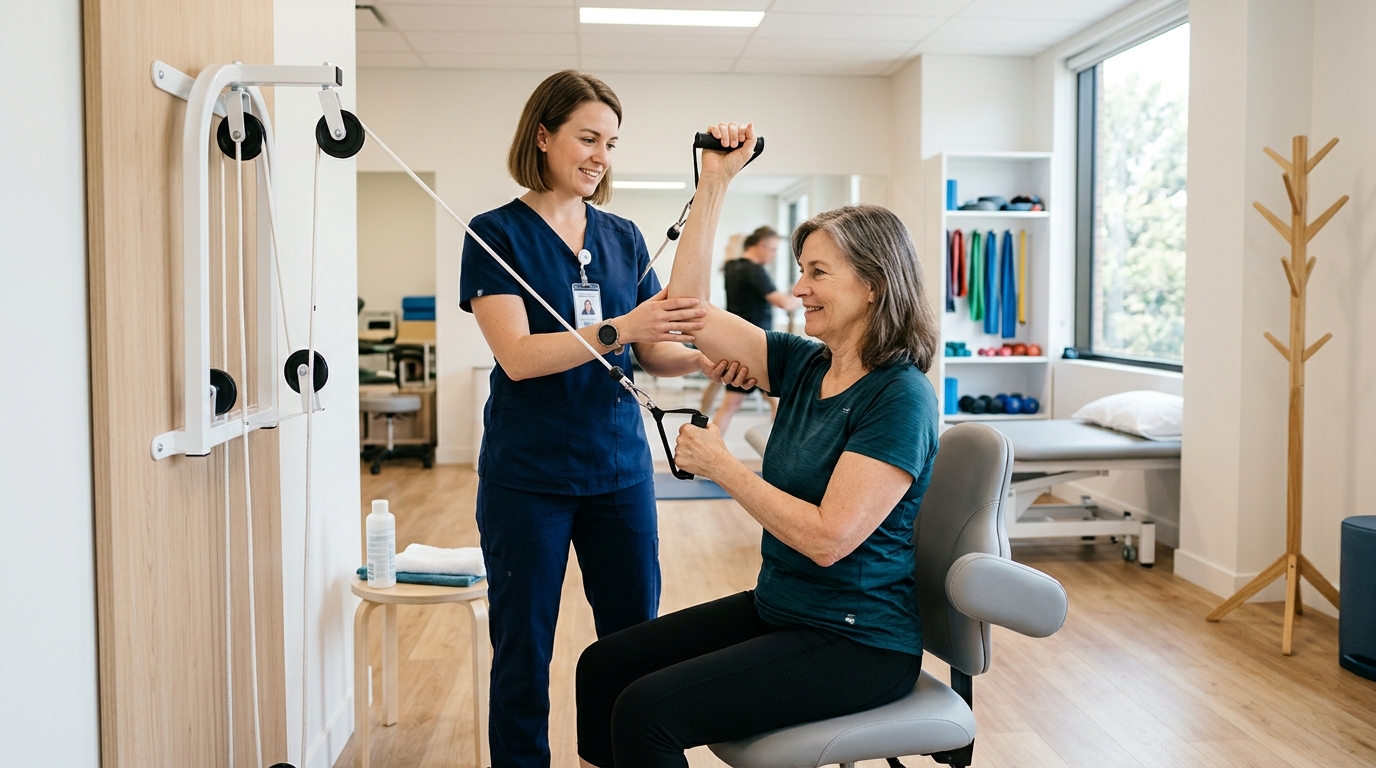
At Dr Waheed Physio, clinical evaluation by Dr. Waheed Muhammad, Consultant Physical Therapist at DHQ Teaching Hospital Swabi, isolates individual rotator cuff tendons (Neer, Hawkins-Kennedy, Empty Can tests) and assesses thoracic spine mobility.
What to expect during shoulder rehabilitation
Rotator cuff tendinopathy and subacromial impingement require structured tendon remodeling. Most patients experience notable symptom reduction within 4 to 6 weeks, with full functional capacity and overhead power returning over 8 to 12 weeks of progressive loading.
No. Immobilizing the shoulder in a sling leads to rapid muscle atrophy, joint contracture, and secondary frozen shoulder. Gentle active movement within comfort promotes blood circulation and faster tissue healing.
Tendinopathy causes pain on active motion but muscle strength remains intact when tested with pain-relieving maneuvers. A substantial full-thickness tear causes true motor weakness (the arm falls when lifted passively). Dr. Waheed conducts specific orthopedic tests to differentiate tendon irritation from tears.
Yes. A rounded upper back (thoracic kyphosis) and forward-tilted shoulder blades tilt the acromion roof downward, reducing subacromial clearance by up to 50% during arm elevation. Restoring thoracic extension and scapular retraction widens this subacromial space.
Explore related upper body and musculoskeletal conditions
Schedule an expert shoulder evaluation
Consult Dr. Waheed Muhammad, Consultant Physical Therapist at DHQ Teaching Hospital Swabi. Private consultations held at Doctors Medical Center, Jahangira Road, Swabi (3:00 PM – 7:30 PM, Monday to Saturday).