Muscle Strains & Soft Tissue Care
Restoring muscle tissue integrity, preventing disorienting scar tissue, and safely progressing from acute strain to full athletic and daily performance in Swabi.
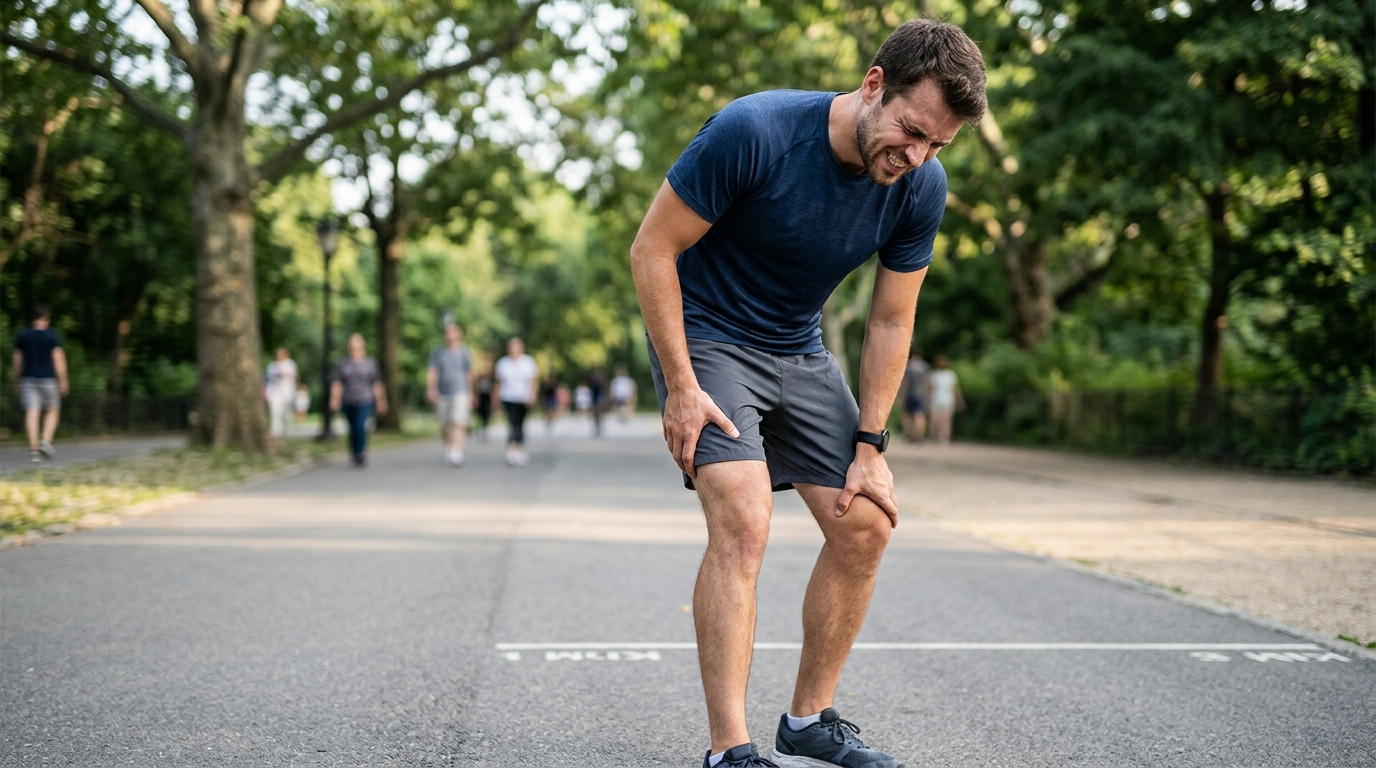
What happens during a muscle strain?
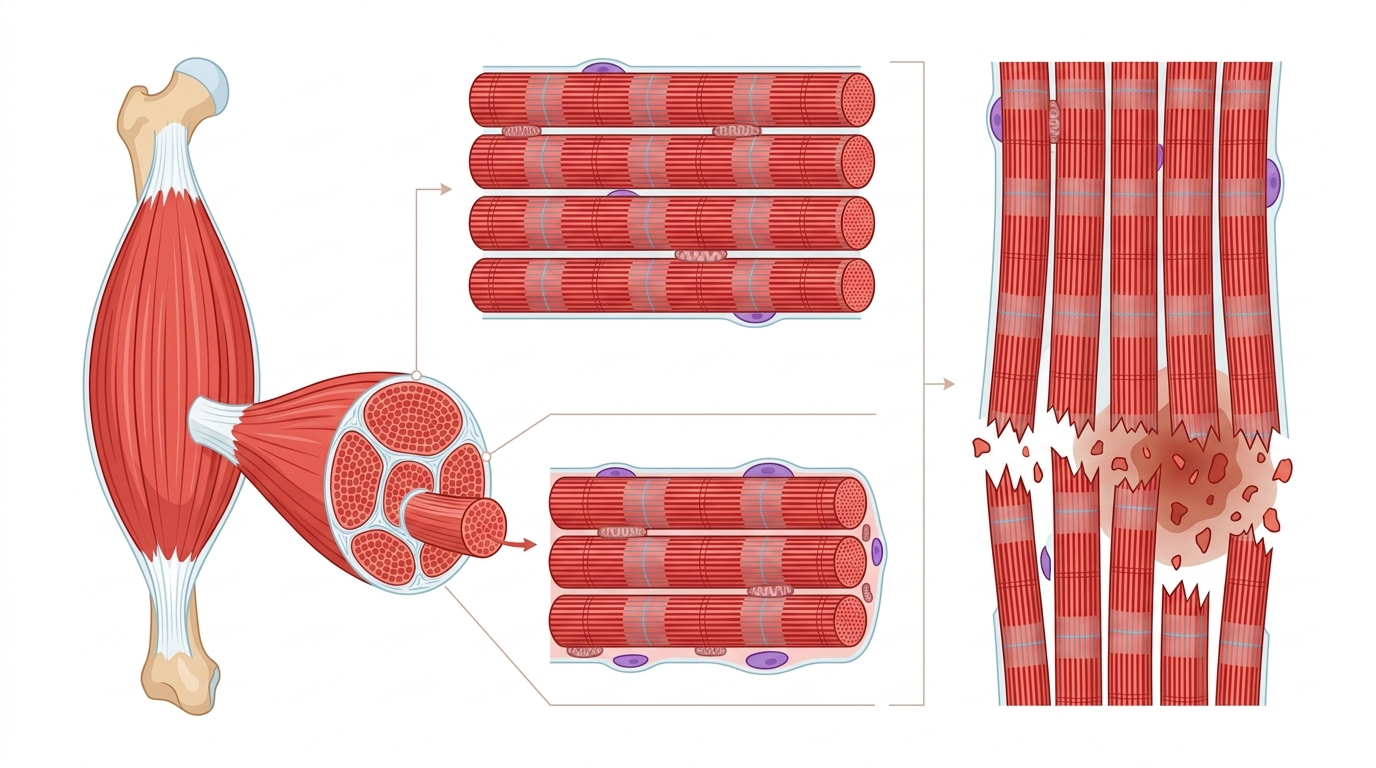
A muscle strain occurs when muscle fibers are stretched beyond their physiological tensile limits or subjected to sudden eccentric overload—frequently during rapid acceleration, sudden deceleration, or heavy lifting. The most vulnerable zone is the myotendinous junction, where flexible muscle tissue blends into firmer tendon collagen.
Strains range from Grade 1 (microscopic tearing of a few fibers with minimal loss of strength) to Grade 2 (substantial partial tearing accompanied by marked swelling and pain) and Grade 3 (complete functional rupture). Common sites include the hamstrings, quadriceps, gastrocnemius (calf), and adductors (groin).
Healing follows an inflammatory, proliferative, and remodeling sequence. Without structured, progressive mechanical loading, newly formed collagen fibers mature into a disorganized, fragile scar prone to recurrent tearing.
Hallmark signs of an acute muscle strain
Instantaneous stabbing sensation felt in the muscle belly during sprinting, jumping, or sudden lifting.
Ecchymosis and hematoma developing within 24 to 48 hours beneath the site of the fiber disruption.
Sharp intensification of pain whenever the injured muscle contracts against resistance or body weight.
Involuntary neuromuscular tightening preventing full lengthening or stretching of the affected limb.
While conservative physical therapy resolves most muscle strains, immediate medical assessment is required if you observe:
- Palpable muscle defect or visible gap: A distinct hollow depression or balling up of the muscle belly indicating a complete Grade 3 tear or avulsion.
- Rapidly expanding tense hematoma: Severe swelling accompanied by skin pallor, numbness, or extreme tightness (concerning for acute compartment syndrome).
- Complete inability to bear weight: Sudden giving way or loss of limb stability following the injury.
Evidence-based muscle remodeling protocol
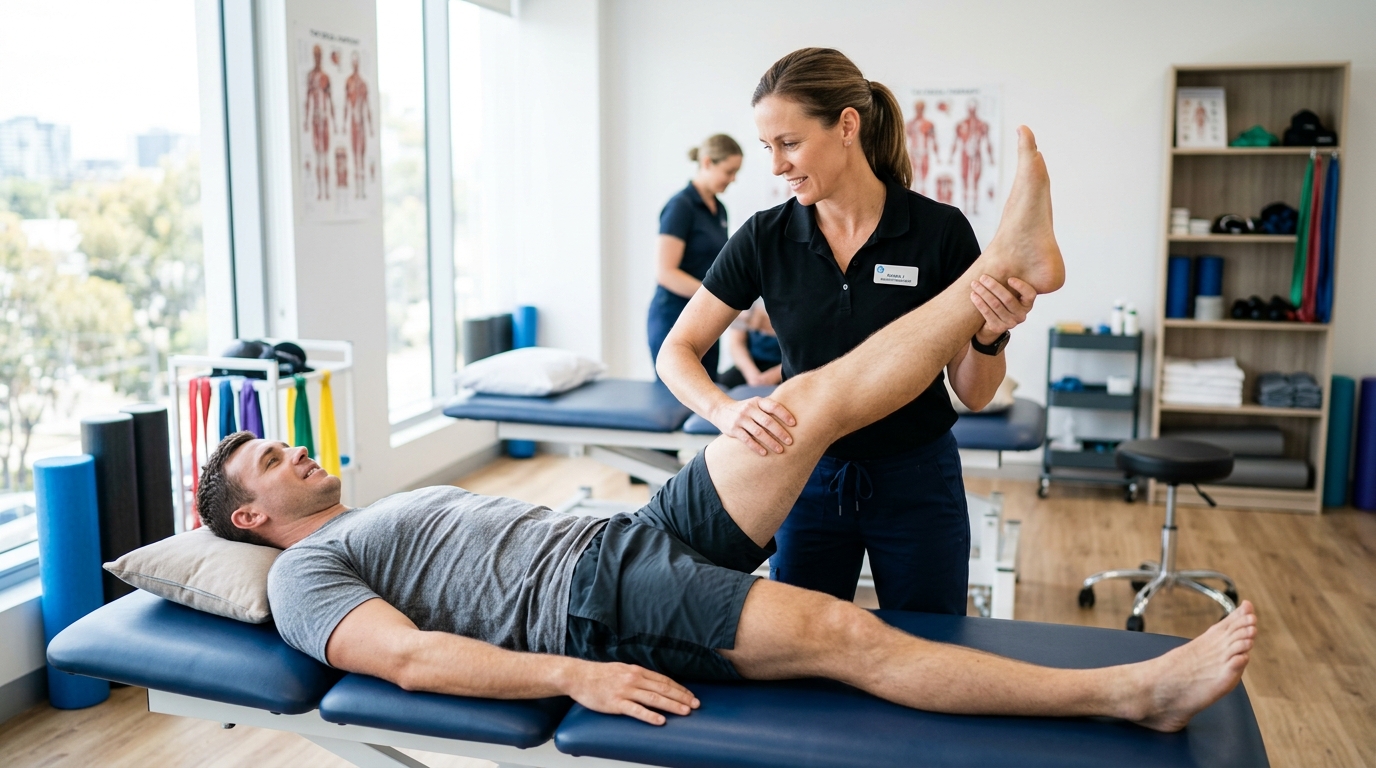
At Dr Waheed Physio, clinical evaluation by Dr. Waheed Muhammad, Consultant Physical Therapist at DHQ Teaching Hospital Swabi, determines strain grading, muscle length deficit, and motor inhibition before structuring a phased recovery plan:
What to expect during muscle strain recovery
Mild Grade 1 strains typically resolve within 2 to 3 weeks of structured progressive loading. Moderate Grade 2 tears require 4 to 8 weeks for cellular collagen realignment and peak force restoration. Returning to sports without eccentric rehabilitation carries up to a 30% re-injury rate within the first month.
Complete rest causes healing muscle fibers to form a disorganized, tangled scar with decreased tensile strength and shortened fascicle length. Controlled, gentle early movement signals regenerating myofibers to align parallel to lines of mechanical tension, ensuring a stronger repair.
In the first 48 hours, apply ice and compression to limit excessive intramuscular bleeding and swelling. Avoid heating pads or deep, painful massages during this initial phase as heat increases capillary dilation and hematoma size. Heat is beneficial later during the remodeling phase.
Pain relief alone is not enough. Return-to-activity clearance requires symmetric muscle strength (at least 90% compared to the uninjured side), full pain-free passive range of motion, and successful completion of high-speed deceleration drills without hesitation.
Explore related muscular and athletic conditions
Schedule an expert muscle strain assessment
Consult Dr. Waheed Muhammad, Consultant Physical Therapist at DHQ Teaching Hospital Swabi. Private consultations held at Doctors Medical Center, Jahangira Road, Swabi (3:00 PM – 7:30 PM, Monday to Saturday).