
Chronic Pain Management & Movement Desensitization
Evidence-based biopsychosocial physical therapy, nervous system desensitization, and graded functional recovery in Swabi.
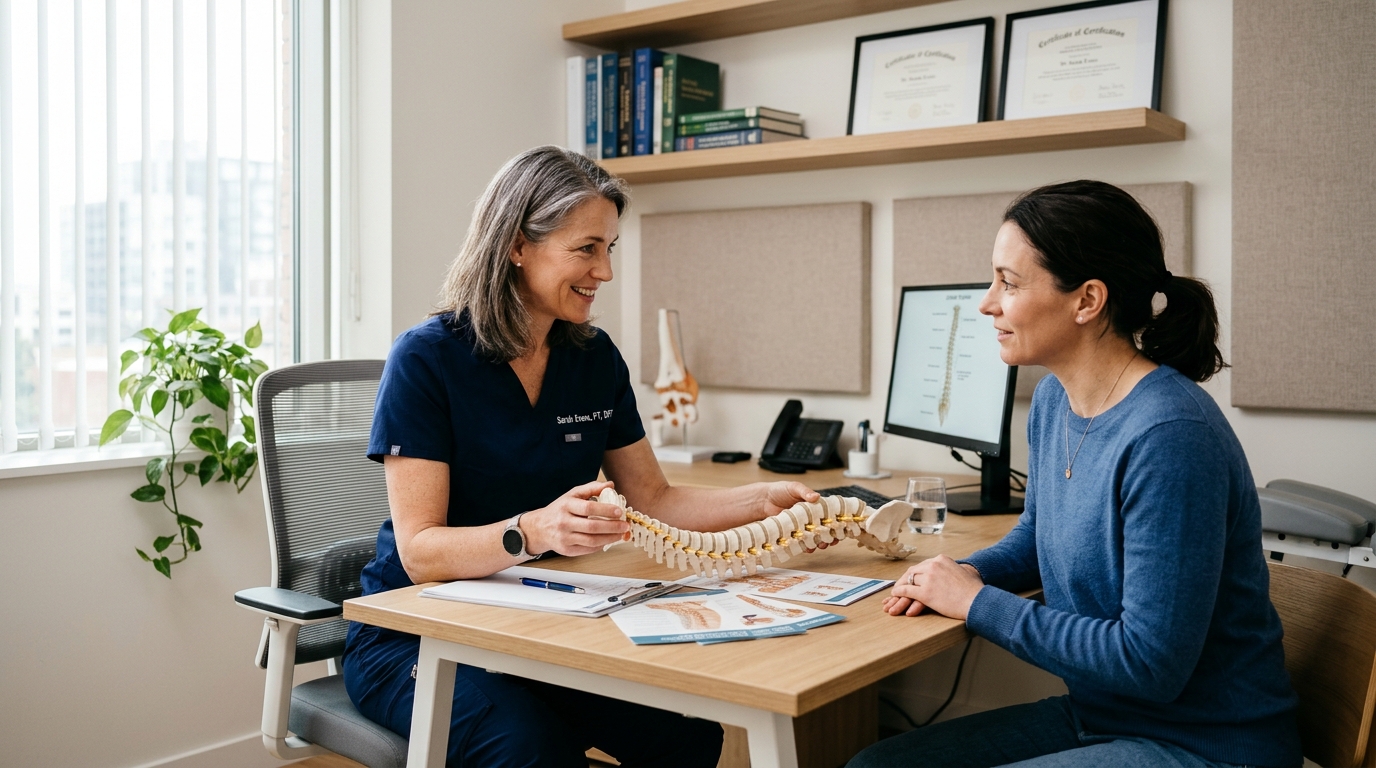
Understanding central sensitization, neuroplasticity, and persistent pain
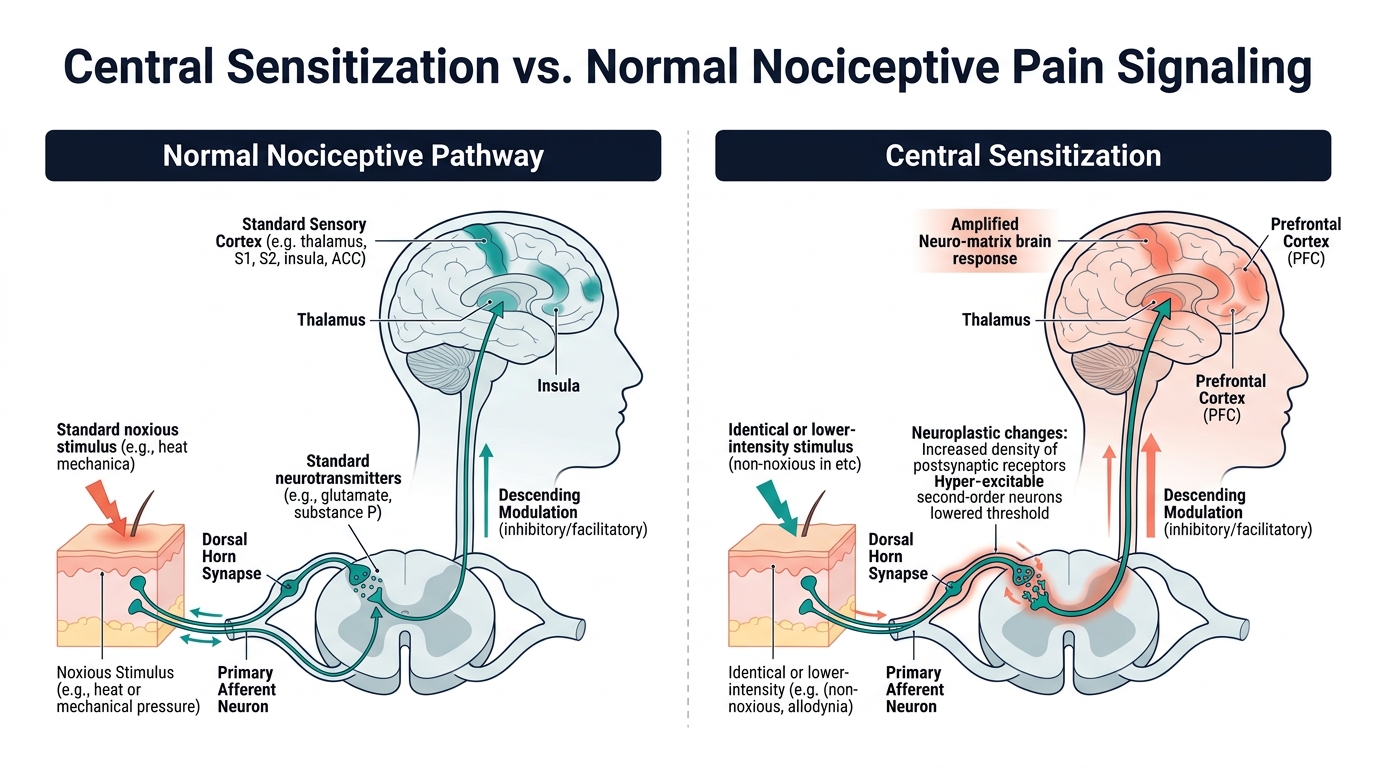
Pain that persists beyond the normal tissue healing window (>3 months) ceases to function as a direct indicator of structural tissue damage. Instead, chronic pain reflects neuroplastic changes within the central nervous system: a heightened, hypersensitive state known as central sensitization or nociplastic pain.
In this state, the spinal cord and brain amplify sensory input, lowering the threshold for pain signaling. Non-harmful mechanical movements, gentle pressure, or emotional stress are misinterpreted by an overprotective nervous system as threats, producing genuine physical pain (allodynia and hyperalgesia).
This frequently triggers a debilitating fear-avoidance cycle: movement is avoided due to fear of harm, resulting in physical deconditioning, stiffened joints, social isolation, and heightened nervous system vigilance. Recovery requires retraining the nervous system to perceive movement as safe once again.
Key indicators and functional symptoms
Widespread or Migratory Pain
Persistent aching or burning sensations that extend across multiple body regions or shift unpredictably over time.
Heightened Mechanical Sensitivity
Pain triggered by light touch, minor pressure, or gentle everyday movements that should normally be painless.
Fear of Movement (Kinesiophobia)
Anxious hesitation and protective muscle guarding during daily activities due to fear of causing internal bodily damage.
Severe Fatigue & Unrefreshing Sleep
Exhaustion, mental fog, and unrefreshing sleep resulting from continuous nervous system hyperactivity.
When to seek urgent medical evaluation (Red Flags)
Seek urgent medical evaluation if chronic pain is accompanied by red-flag systemic indicators: unexplained involuntary weight loss, fever, or night sweats; progressive motor weakness or sudden bowel/bladder incontinence; severe non-mechanical night pain unrelieved by resting; or history of cancer requiring comprehensive medical diagnostic workup.
How physiotherapy recalibrates a hypersensitive nervous system

Phase 1: Pain Neuroscience Education (PNE) & De-threating: We help patients understand the difference between ‘hurt and harm’. Reframing pain neurobiology calms threat appraisal in the brain and reduces neuroendocrine stress signaling.
Phase 2: Graded Motor Imagery & Activity Pacing (Weeks 1–6): We introduce gentle movement visualization, left-right laterality training, and structured pacing schedules. Pacing breaks the boom-bust cycle of overactivity followed by prolonged crashes.
Phase 3: Graded Functional Exposure & Strength (Weeks 6–16+): We systematically reintroduce cardiovascular conditioning, functional resistance exercises, and enjoyable physical hobbies, building physical tolerance and cognitive resilience.
What to expect during rehabilitation
Chronic Pain Recovery Roadmap
Weeks 1–4 (PNE & Nervous System Calming): Pain science education, diaphragmatic breathing, laterality retraining, and gentle baseline pacing.
Weeks 5–12 (Graded Movement Exposure): Progressive low-impact aerobic exercise, functional daily task practice, and flare-up self-management.
Weeks 12–24+ (Long-Term Autonomy): Sustained functional physical capacity, re-engagement in valued life activities, and reduced reliance on passive care.
Does persistent pain mean my spine or joints are permanently damaged?
No. Modern neurobiology proves that in chronic pain, the nervous system’s alarm volume is turned up too high, continuing to signal danger long after initial tissues have healed.
Why does exercise make my pain flare up at first?
Hypersensitive sensory nerves misinterpret normal movement sensations as threatening. By using carefully graded, paced exposure, we gradually teach the nervous system that movement is safe.
What is the goal of physical therapy in chronic pain?
Rather than chasing temporary passive relief, our goal is to restore functional independence, improve movement confidence, rebuild physical strength, and reduce overall nervous system sensitivity.
Related clinical rehabilitation care
Break the Chronic Pain Cycle & Regain Control
Consult Dr. Waheed Muhammad in Swabi for evidence-based chronic pain physical therapy. We guide you toward safe movement and functional independence.