Fracture Rehabilitation & Bone Healing Care
Post-immobilization joint restoration, progressive bone loading, and functional recovery following fracture union in Swabi.
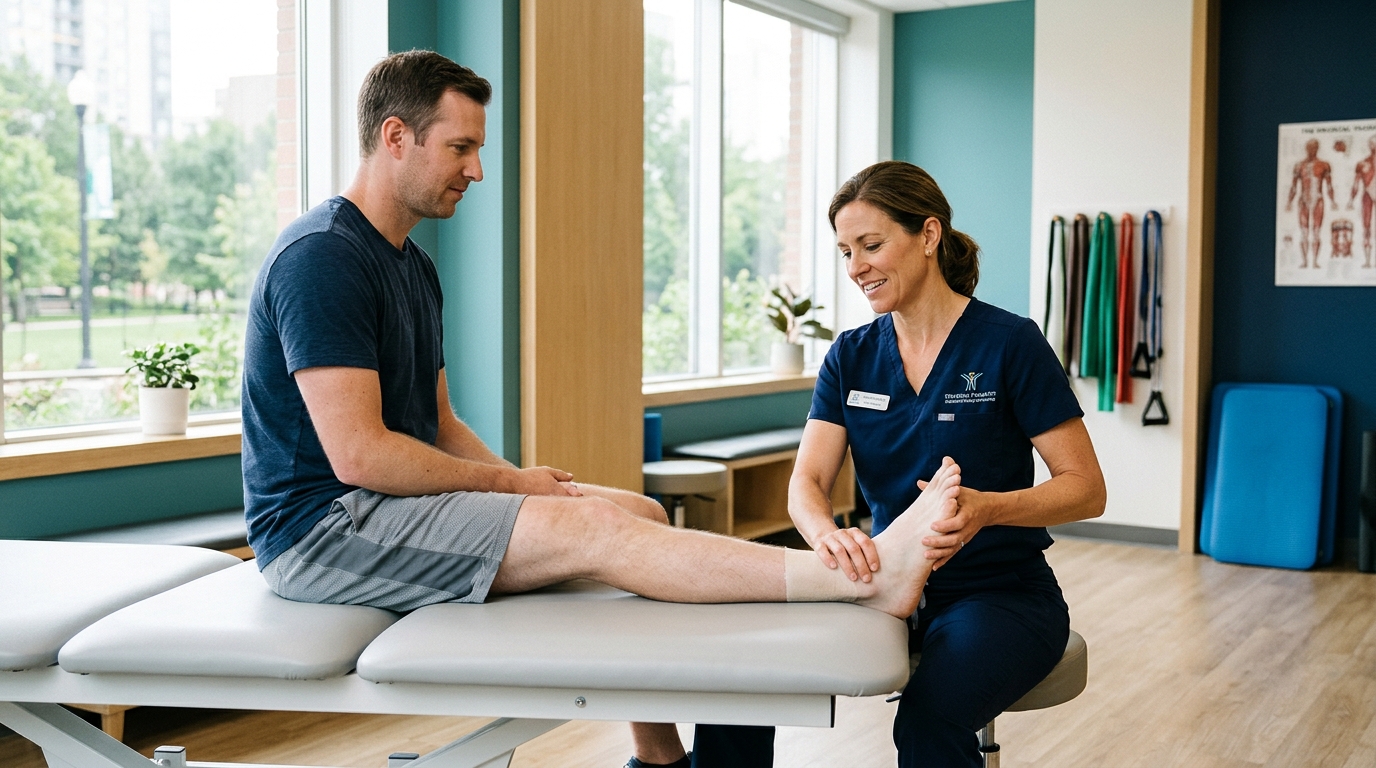
Understanding bone consolidation, immobilization stiffness, and remobilization
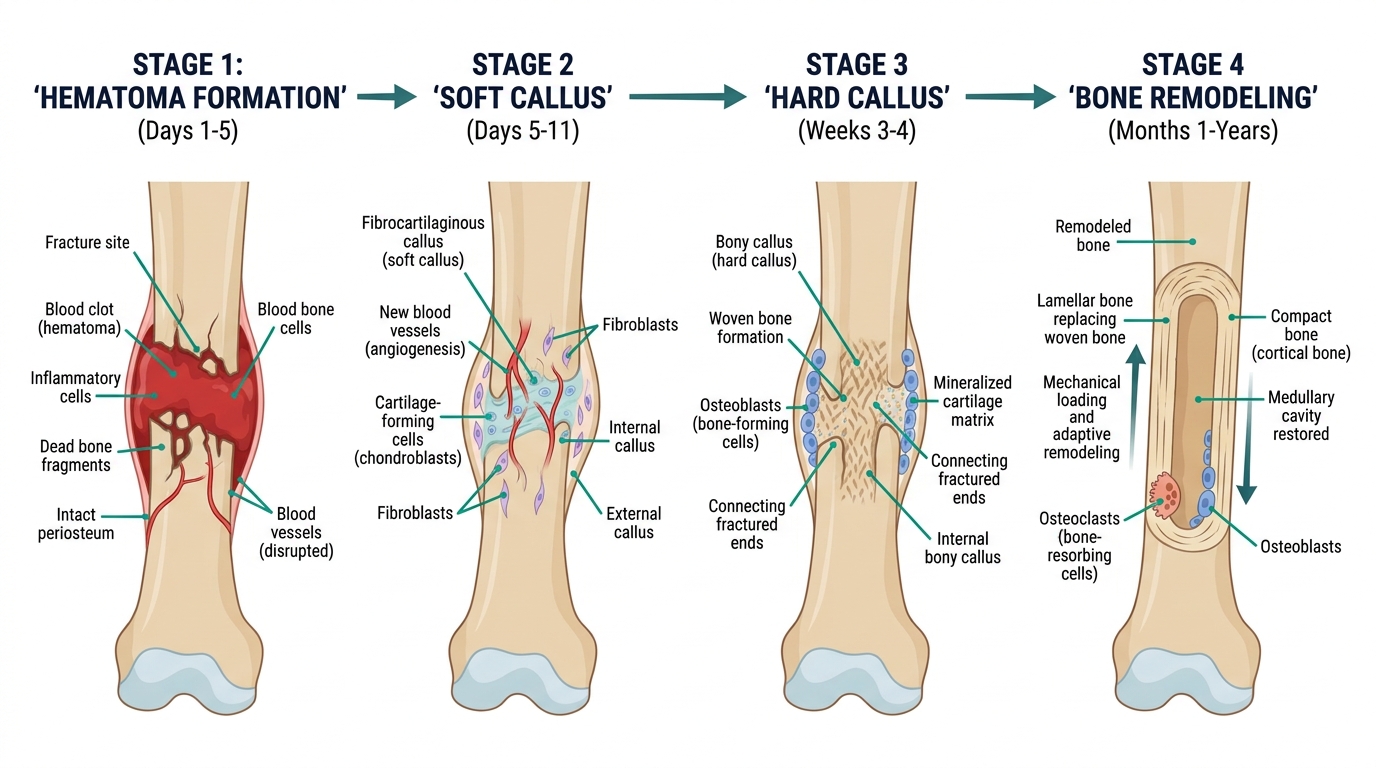
Key indicators and functional symptoms
Severe Joint Contracture
Pronounced stiffness and mechanical resistance in adjacent joints following weeks of immobilization in a cast or brace.
Marked Muscle Wasting
Visible reduction in limb circumference and weakness resulting from prolonged disuse and lack of active motor recruitment.
Dependent Swelling & Color Changes
Fluid accumulation and dusky redness in the foot or hand when lowered, caused by impaired venous pump function.
Sensory Hypersensitivity
Discomfort or exaggerated sensitivity of newly uncasted skin to light touch, clothing friction, or warm water.
When to seek urgent medical evaluation (Red Flags)
Seek immediate medical review if you experience: sudden severe, sharp pain at the fracture site upon light loading (suggesting non-union or re-fracture); signs of Complex Regional Pain Syndrome (CRPS—disproportionate burning pain, allodynia, extreme swelling, abnormal sweating, or shiny skin); sudden limb coldness, pallor, or absent distal pulse; or signs of deep vein thrombosis (DVT).
Evidence-based protocols for post-fracture joint restoration
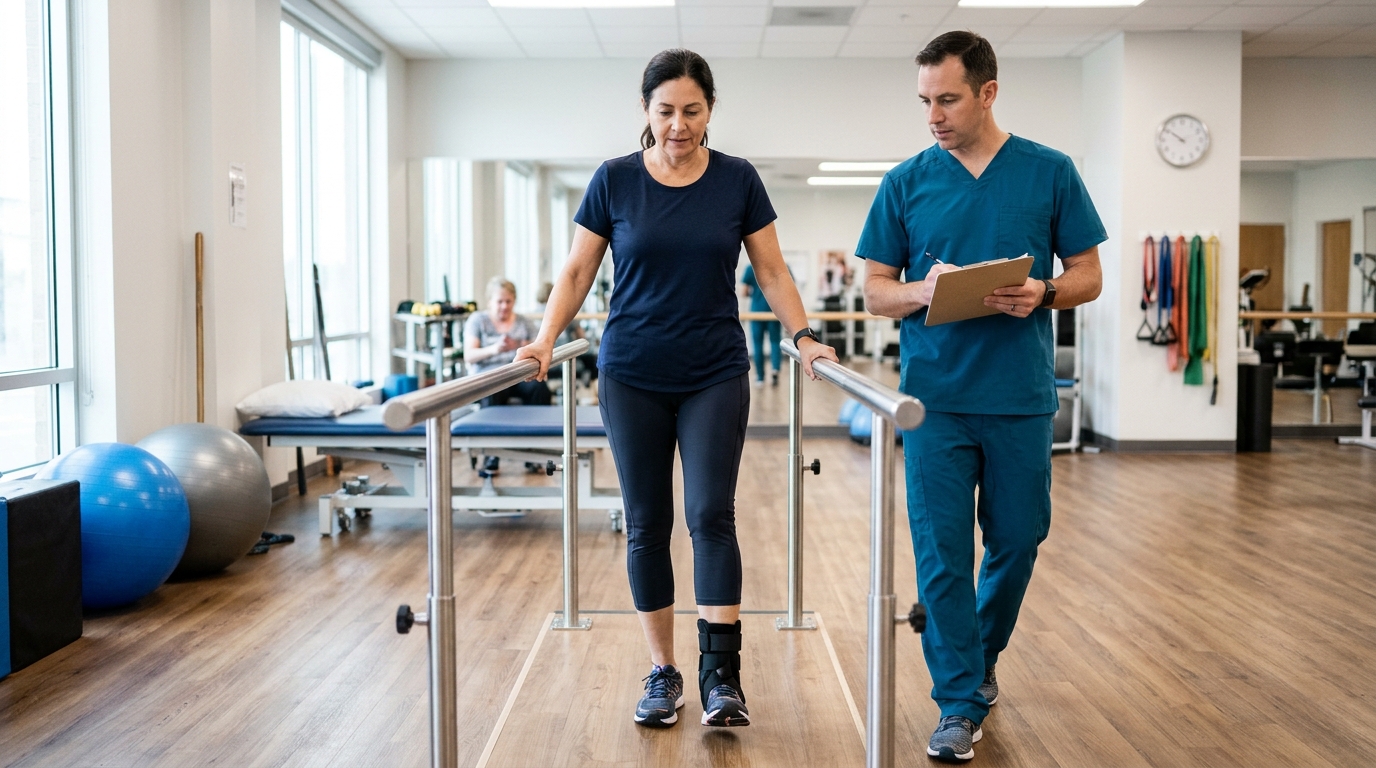
What to expect during rehabilitation
Post-Fracture Recovery Roadmap
Weeks 1–3 (Early Mobilization): Swelling control, skin desensitization, gentle active-assisted range of motion, and circulatory exercises.
Weeks 4–8 (Bone Loading & Strengthening): Graduated weight-bearing progression, closed-chain resistance, and symmetrical gait re-education.
Weeks 8–16+ (Impact & Functional Autonomy): Full weight-bearing tolerance, dynamic balance, agility, and return to manual work or athletic hobbies.
Why is my joint so stiff after removing the cast?
During weeks of cast immobilization, synovial fluid circulation decreases and periarticular collagen fibers cross-link. Specialized manual therapy and progressive movement safely stretch these contracted tissues.
When can I bear full weight on my healed bone?
Weight-bearing progression is guided strictly by radiographic evidence of bridging callus from your surgeon and clinical assessment of bone tenderness during physiotherapy.
Will surgical metal plates or screws interfere with my exercises?
No. Modern internal fixation (plates and screws) provides rigid skeletal stability, allowing early structured physical therapy to safely proceed without disturbing hardware.
Related clinical rehabilitation care
Post-Surgery Rehabilitation
Comprehensive recovery following surgical fixation and joint procedures.
Ankle Pain & Sprains
Malleolar fracture recovery, balance, and joint stabilization.
Balance & Mobility
Sensory re-weighting and fall prevention after lower limb fractures.
Rebuild Bone Strength & Restore Natural Movement
Schedule your post-fracture physical therapy evaluation with Dr. Waheed Muhammad in Swabi. We help you transition safely from cast removal to full independence.