Parkinson's Disease Neuro-Rehabilitation
Evidence-based high-amplitude movement training, cueing strategies, and fall prevention for Parkinson’s disease with Dr. Waheed Muhammad in Swabi.
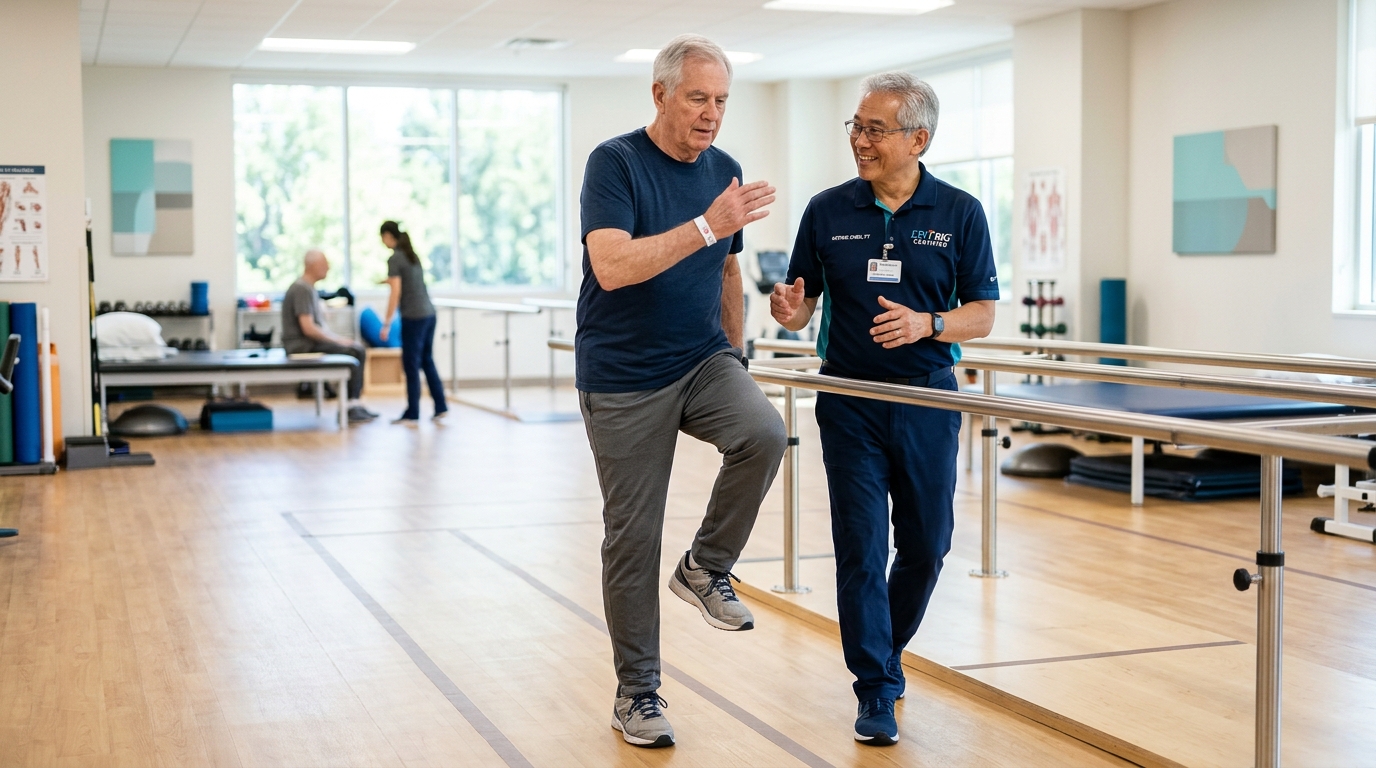
Understanding basal ganglia dysfunction, bradykinesia, and motor automaticity
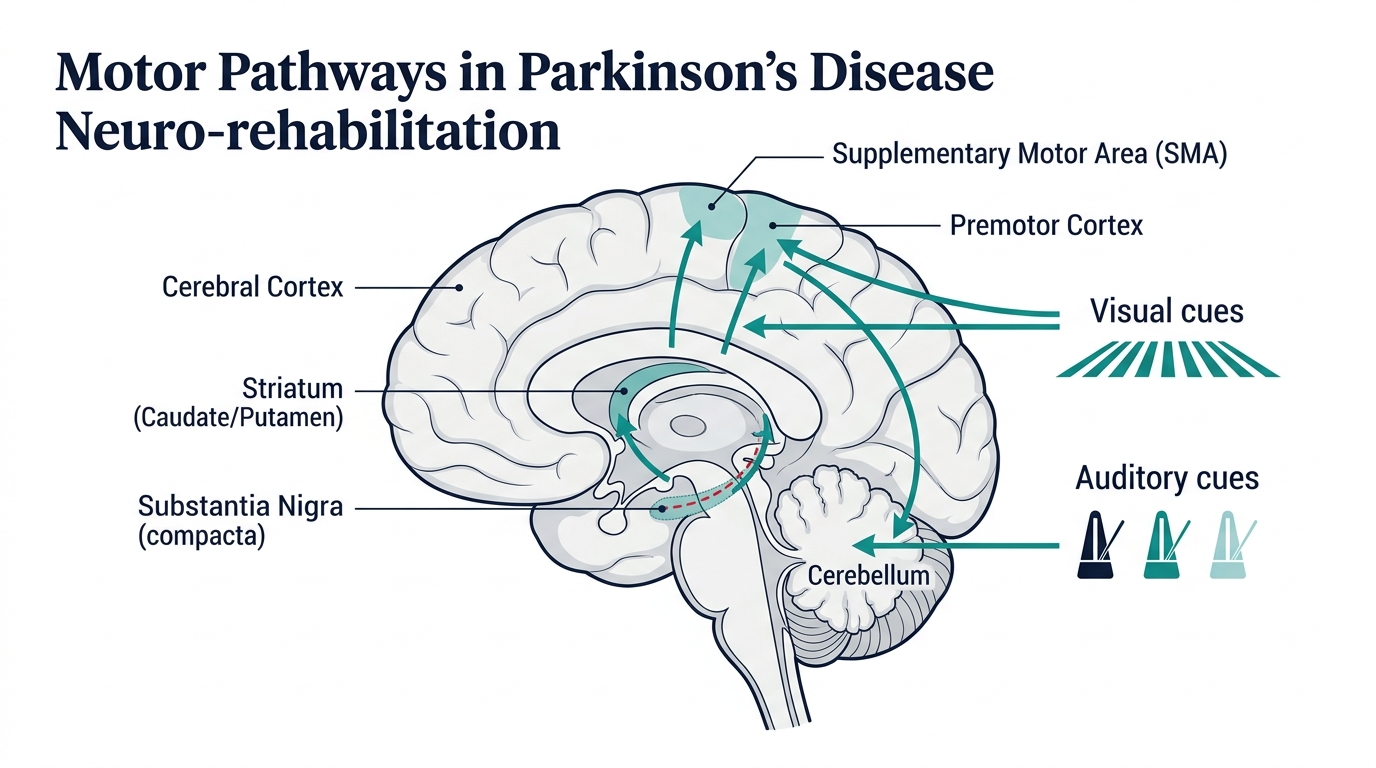
Parkinson’s disease is a neurodegenerative disorder characterized by progressive loss of dopaminergic neurons in the substantia nigra. This disruption deprives the basal ganglia of the neurochemical signaling required to initiate, scale, and regulate smooth automatic movement.
Clinically, patients experience bradykinesia (slowness of movement), hypokinesia (smaller-than-intended movement amplitude), cogwheel or lead-pipe rigidity, resting tremor, and progressive postural instability. Because internal motor scaling is impaired, patients perceive their small, shuffling steps as normal.
Specialized neuro-rehabilitation leverages neuroplasticity through high-intensity, high-amplitude exercises and external sensory cues. By utilizing visual, auditory, and cognitive strategies, physical therapy activates alternative cortical pathways that bypass damaged basal ganglia circuits.
Key indicators and functional symptoms
Bradykinesia & Hypokinesia
Slowness in executing movements and progressive reduction in physical amplitude (smaller steps, softer voice, micro-movements).
Freezing of Gait (FOG)
Sudden, brief sensation of feet being glued to the floor, particularly when initiating walking, passing doorways, or turning.
Postural Instability & Retropulsion
Impaired balance recovery reactions and backward balance loss during standing transitions, increasing fall risk.
Muscular Rigidity & Flexed Posture
Stiffness across axial and limb muscles, often leading to a stooped forward posture and loss of reciprocal arm swing.
When to seek urgent medical evaluation (Red Flags)
Seek immediate medical review if you experience: sudden rapid functional decline over days (frequently triggered by systemic infection, UTI, or medication interactions); recurrent unexplained syncope (fainting upon standing due to severe orthostatic hypotension); acute choking or severe dysphagia; or acute confusion, visual hallucinations, or delirium.
Evidence-based neuro-rehabilitation protocols for Parkinson's
Phase 1: High-Amplitude Training (LSVT BIG Principles): Intensive, whole-body exercises demand maximal effort and exaggerated large-amplitude movements. This recalibrates the patient’s internal sensory perception of movement magnitude.
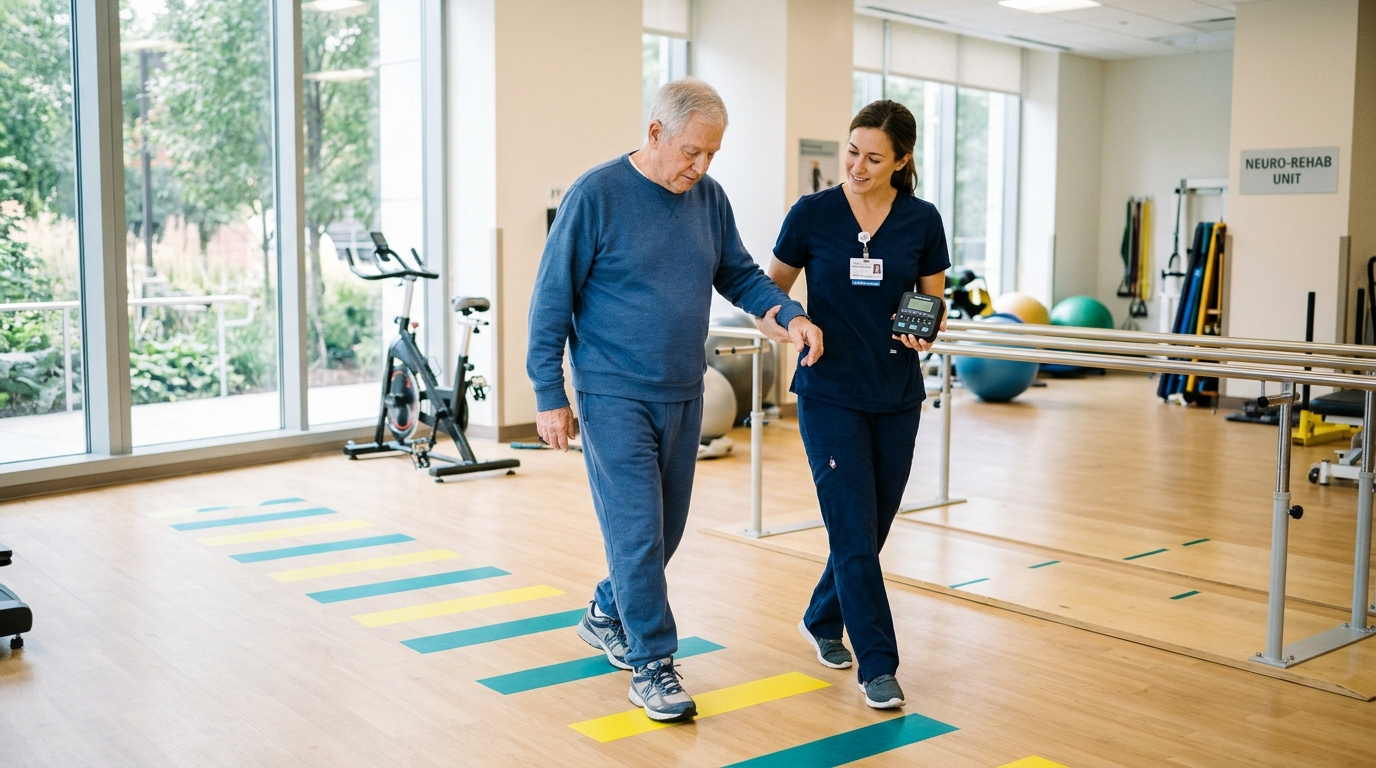
Phase 2: Sensory Cueing & Freezing Strategies: We train patients to utilize rhythmic auditory cues (metronome beats, counting), visual floor targets, and cognitive self-commands to unfreeze movement and maintain stride length.
Phase 3: Dynamic Balance & Dual-Task Retraining: We challenge dynamic reactive balance, perturbation recovery, and dual-task activities (walking while talking or carrying an object), directly preventing falls in the home.
What to expect during rehabilitation
Parkinson's Rehabilitation Roadmap
Intensive Phase (Weeks 1–4): Daily high-amplitude motor training, sensory cueing introduction, and foundational balance strategies.
Consolidation Phase (Weeks 5–8): Integrating large movements into bed mobility, car transfers, outdoor walking, and home fall-proofing.
Maintenance & Community Care (Ongoing): Structured ongoing home routine, group maintenance exercises, and regular 6-month clinical reviews.
Can physical therapy slow the functional decline in Parkinson's?
Yes. Robust clinical trials show that vigorous, goal-directed physical exercise promotes neuroplastic adaptations and elevates brain-derived neurotrophic factor (BDNF), helping preserve functional independence.
How do sensory cues help overcome freezing of gait?
Sensory cues (like lines on the floor or a rhythmic auditory beat) bypass the damaged basal ganglia and stimulate frontal cortical pathways, allowing the brain to trigger a normal stepping response.
How often should a Parkinson's patient engage in therapy?
High-frequency intensive blocks (4 sessions per week for 4 weeks) followed by daily home amplitude maintenance and semi-annual clinical tune-ups produce the best long-term mobility retention.
Related clinical rehabilitation care
Balance & Mobility
Sensory re-weighting, fall prevention, and perturbation training.
Stroke Rehabilitation
Task-oriented neuroplastic recovery and functional gait re-education.
Posture & Movement Problems
Spinal extension, axial mobility, and biomechanical correction.
Muscle & Joint Pain
Relieving muscular rigidity, joint tightness, and secondary musculoskeletal strain.
Reclaim Bigger Movement, Balance & Independence
Book a specialized neurological evaluation with Dr. Waheed Muhammad in Swabi. We structure individualized high-amplitude therapy and fall prevention plans.