
Heel Pain & Plantar Fasciitis Care
Targeted clinical relief for morning heel pain, plantar fascia loading protocols, and long-term arch restoration with Dr. Waheed Muhammad in Swabi.

What causes chronic heel pain and plantar fasciopathy?
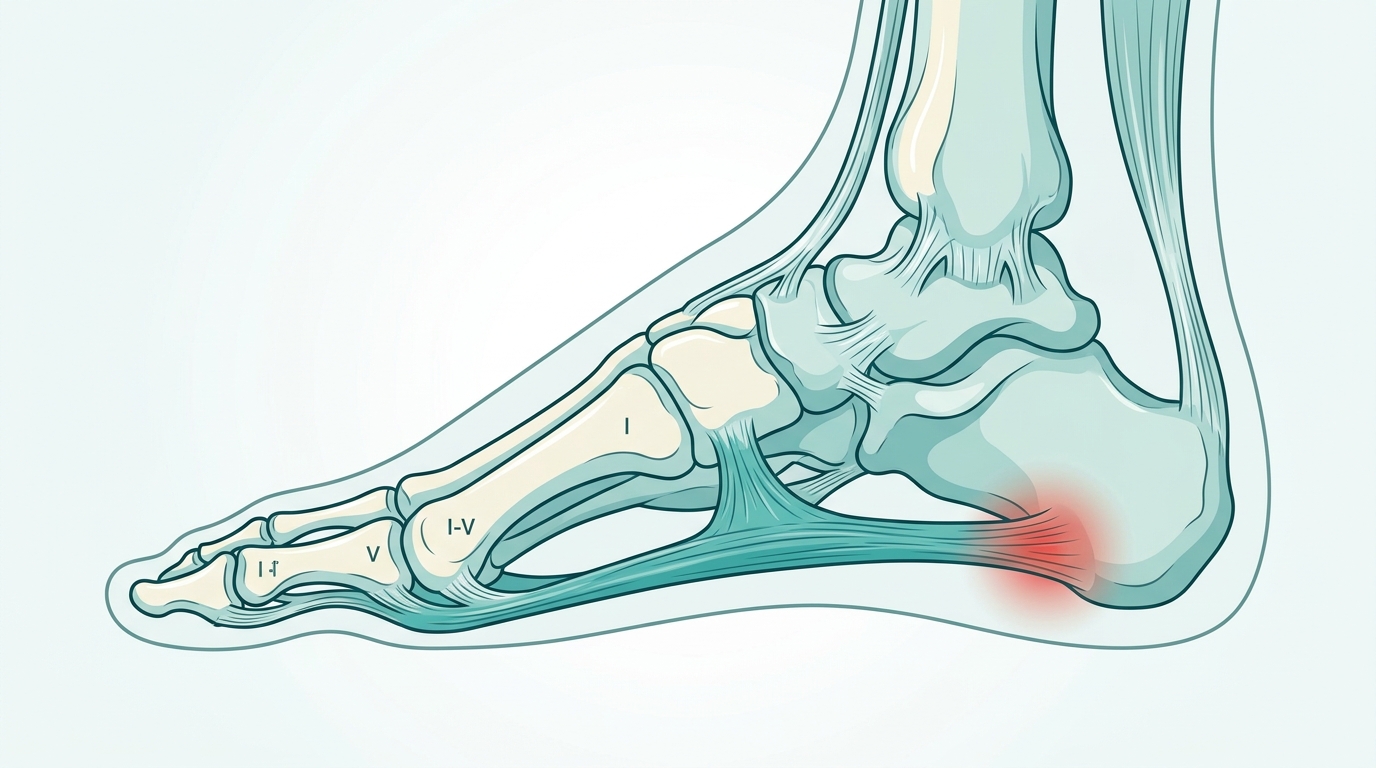
Plantar fasciitis is not merely an acute inflammatory event; histopathological evidence identifies it as a degenerative fasciopathy characterized by collagen breakdown, myxoid degeneration, and tensile micro-tearing at the medial calcaneal tuberosity insertion.
The plantar fascia acts as a mechanical tie-rod supporting the medial longitudinal arch through the “windlass mechanism”: when toes extend during push-off, the aponeurosis winds around the metatarsal heads, tightening the arch. Factors such as tight Achilles tendons, unsupportive footwear, sudden spikes in standing/walking, or altered foot pronation excessively overload this fibrous band.
Complete rest weakens the collagen fibers further, leading to recurrent pain upon resuming activity. Sustainable healing requires high-load mechanical tensile stimulus to promote cellular realignment and tissue resilience.
Hallmark clinical symptoms of plantar fasciopathy
First-Step Morning Heel Pain
Sharp, stabbing pain beneath the heel when taking the first steps out of bed, gradually easing into a dull ache as the foot warms up.
Post-Inactivity Stiffness
Sudden resurgence of heel pain and stiffness upon standing after prolonged sitting at a desk, driving, or resting.
Medial Calcaneal Tenderness
Exquisite, localized tenderness when pressing on the anteromedial border of the heel bone where the fascia attaches.
Pain with Prolonged Standing
Progressive, burning ache under the heel and arch that worsens toward the end of the day or after prolonged standing on hard concrete floors.
When to seek urgent medical evaluation (Red Flags)
Seek specialized medical evaluation if you experience: sudden snapping or popping sensation in the arch followed by immediate acute hematoma (suspected plantar fascia rupture); non-weight-bearing continuous night pain or exquisite tenderness on lateral calcaneal squeeze (calcaneal stress fracture); burning tingling radiating into the sole and toes (tarsal tunnel nerve entrapment); or bilateral morning heel pain accompanied by inflammatory back stiffness (spondyloarthritis workup).
Evidence-based tensile loading and foot biomechanics
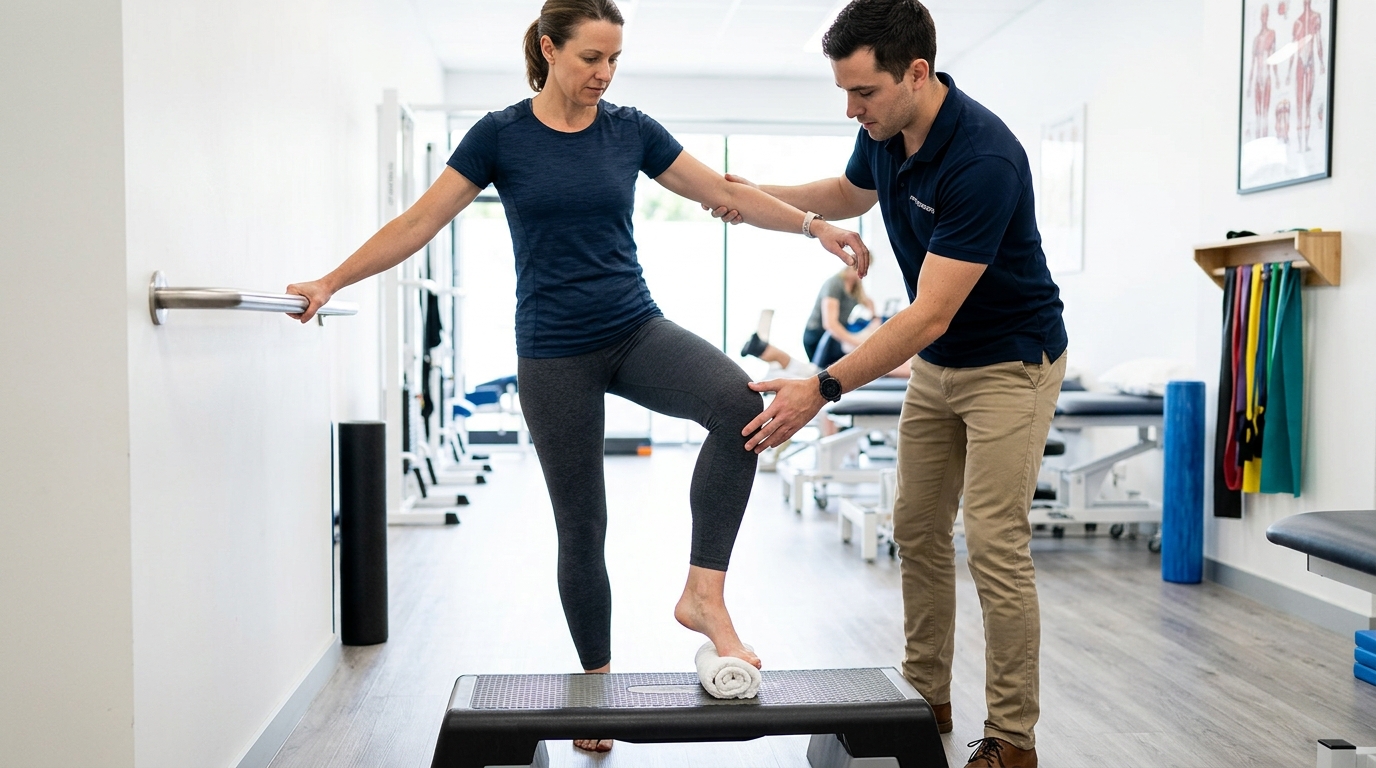
Phase 1: Plantar Fascia Specific Stretching: In the initial irritable stage, cross-friction massage, calf stretching, and targeted plantar fascia stretching (dorsiflexing the toes toward the shin prior to first morning steps) reduce peak morning tensile strain on the calcaneal insertion.
Phase 2: High-Load Strength Training (Rathleff Protocol): Supported by robust randomized trials, heavy slow heel raises performed on a step with a rolled towel under the big toe engage the windlass mechanism. This directs controlled high-tensile load through the fascia, stimulating collagen remodeling and improving energy absorption.
Phase 3: Kinetic Chain & Intrinsic Foot Retraining: We strengthen the intrinsic foot muscles (short foot exercises) and retrain calf-soleus and hip abductor mechanics to prevent recurrent arch collapse and excessive pronation.
What to expect during heel pain rehabilitation
Phased Recovery Roadmap
Weeks 1–3 (Symptom Pacing): Morning pre-walk stretching routine, activity modification, supportive taping, and footwear guidance.
Weeks 4–8 (Tensile Adaptation): Progressive Rathleff high-load heel raises, calf-soleus complex strengthening, and arch support weaning.
Weeks 8–16+ (Long-Term Resilience): Full weight-bearing capacity, tolerance to barefoot walking and running, and sustained recurrence prevention.
Do heel spurs cause the pain?
No. Medical imaging reveals heel spurs in up to 20% of completely asymptomatic people. The spur is a secondary bone adaptation, not the primary pain generator. Pain stems from degenerative mechanical overload in the plantar fascia aponeurosis itself.
Should I get a cortisone injection in my heel?
While corticosteroid injections can offer temporary pain suppression for 4 to 6 weeks, clinical studies demonstrate that they carry a notable risk of plantar fascia rupture and permanent heel fat pad atrophy. Progressive loading through the Rathleff protocol yields superior long-term results.
Why is the first step out of bed the most painful?
During sleep, the foot rests in a relaxed downward position (plantarflexion), causing the healing fascia to shorten and contract. When you take the first morning step, your entire body weight abruptly forces the cold, tightened aponeurosis into sudden stretch, causing acute micro-trauma.
Related lower extremity & tendon conditions
Tendon Injuries
Evidence-based tendon loading protocols for Achilles and lower limb.
Walk Pain-Free Without Morning Heel Discomfort
Book a personalized clinical assessment at Dr Waheed Physio in Swabi. We formulate evidence-based loading protocols that permanently relieve plantar fasciitis.