Sports Injuries & Athletic Recovery Care
Comprehensive sports injury rehabilitation, evidence-based return-to-play protocols, and performance biomechanics restoration in Swabi.
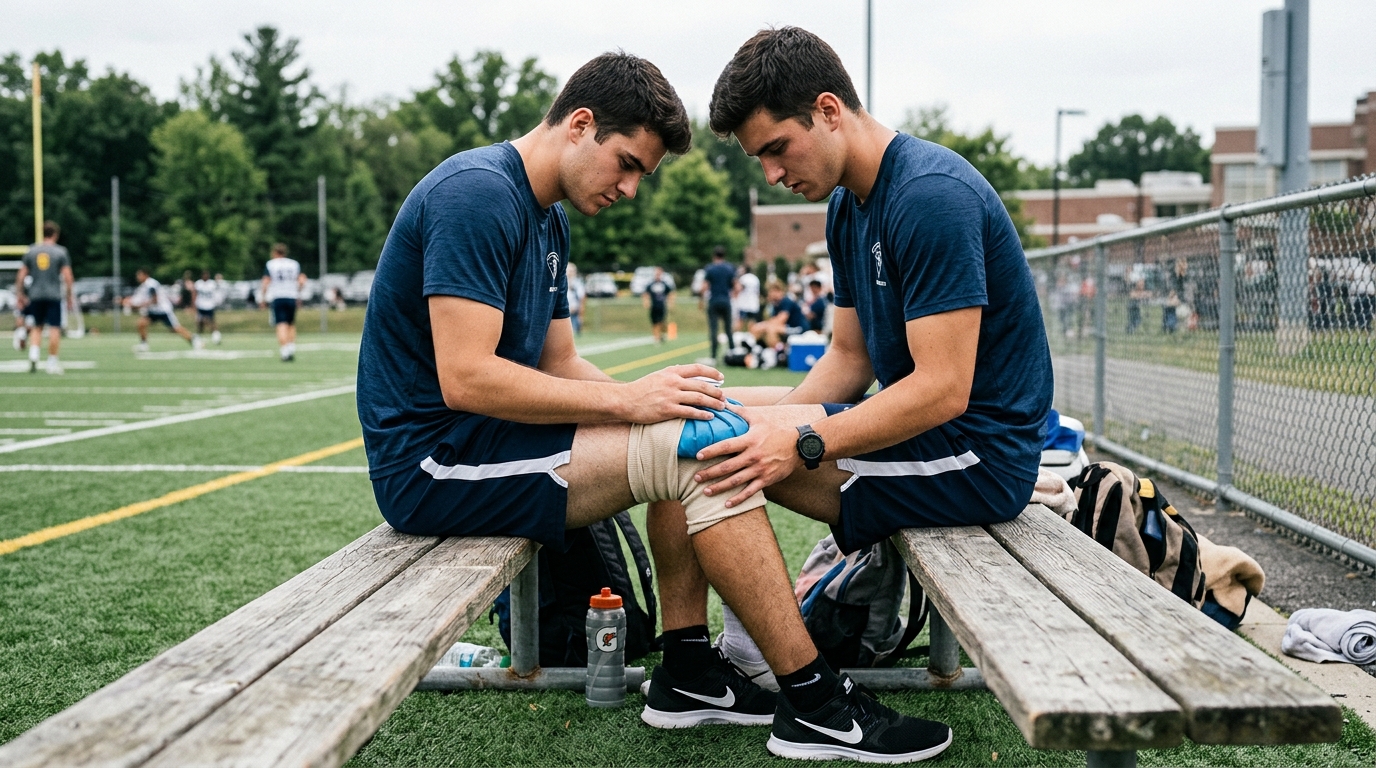
Understanding athletic trauma, deceleration torque, and load spikes
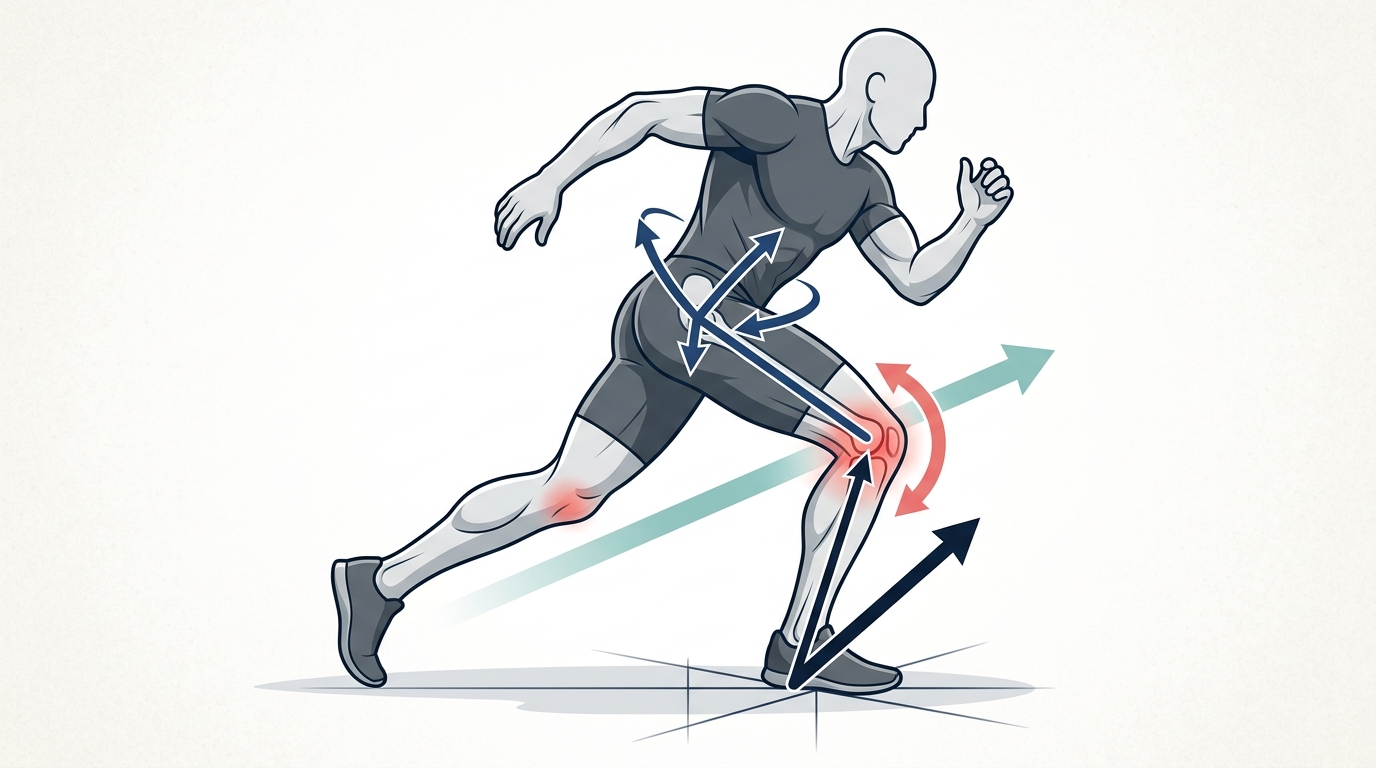
Athletic injuries occur when the instantaneous mechanical demands of high-velocity movement exceed the tensile threshold of biological tissues. They fall broadly into acute traumatic injuries (ACL sprains, meniscus tears, hamstring tears, ankle inversion trauma) and cumulative overuse syndromes (patellar tendinopathy, tibial stress reactions, groin strains).
The primary driver of non-contact athletic injuries is uncontrolled multi-planar torque during rapid deceleration, change of direction (cutting), or awkward single-leg landing. Neuromuscular fatigue, poor hip-core stability, and sudden surges in training volume (elevated acute-to-chronic workload ratios) compromise motor control and expose joint structures to excessive strain.
Successful athletic recovery goes beyond mere symptom reduction; it requires restoring tissue tensile tolerance, re-establishing limb symmetry, and eliminating compensatory movement patterns before returning to competitive match play.
Key indicators of acute and overuse athletic trauma
Audible Pop or Sudden Tearing
Distinct sensation or sound of a pop during pivoting, jumping, or sudden acceleration, frequently followed by immediate joint giving-way.
Rapid Joint Effusion
Noticeable joint swelling developing within 1 to 4 hours of trauma, indicating acute intra-articular bleeding or ligamentous disruption.
Loss of Explosive Power
Inability to push off, sprint, jump, or rapidly decelerate due to sharp pain, protective muscle spasm, or lack of joint stability.
Post-Match Aching & Tightness
Persistent, deep aching in muscles or tendons that worsens 24 to 48 hours after matches and requires lengthy warm-ups to ease.
When to seek emergency medical evaluation (Red Flags)
Seek immediate specialized surgical assessment if you experience: obvious bony deformity or joint dislocation following trauma; locked knee joint with complete inability to achieve extension (displaced bucket-handle meniscal tear); massive joint effusion (hemarthrosis) within 2 hours; or loss of distal pulses, coldness, or numbness in the foot or hand indicating neurovascular compromise.
Phased rehabilitation from acute protection to full athletic return
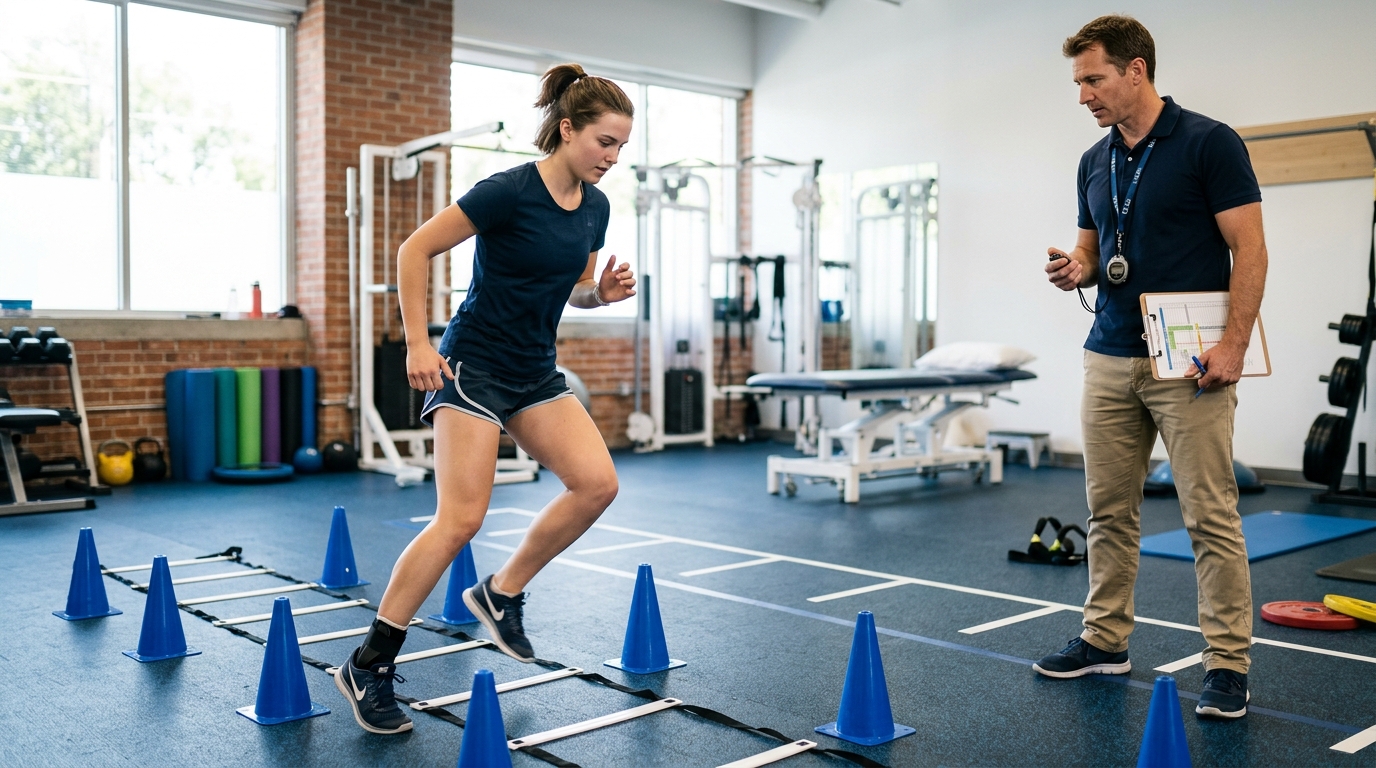
Phase 1: PEACE & LOVE Acute Management: We transition from aggressive immobilization to contemporary tissue loading. Early protected movement, lymphatic drainage, and isometric muscle activation preserve cortical motor mapping without stressing healing collagen fibers.
Phase 2: Heavy Strength & Kinetic Chain Rebuilding: Progressive resistance exercises restore isolated muscle strength and eccentric force-absorption capacity. We address proximal hip and trunk stabilization to prevent excessive knee valgus during high-velocity movements.
Phase 3: Sports-Specific Plyometrics & Agility Drills: Rehabilitation culminates in multidirectional speed work, change-of-direction deceleration drills, and jump-landing mechanics. Objective testing ensures a >90% Limb Symmetry Index before clearance for full training.
What to expect during sports injury rehabilitation
Phased Recovery Roadmap
Weeks 1–2 (Acute Calming): Edema resolution, pain-free range of motion, isometric muscle activation, and non-impact conditioning.
Weeks 3–6 (Strength & Motor Control): Progressive closed-chain resistance, eccentric loading, single-leg balance, and straight-line running re-entry.
Weeks 6–12+ (Return to Play): High-speed agility, cutting drills, contact tolerance, objective functional testing, and competition clearance.
Why is RICE no longer the recommended protocol for acute sports injuries?
Current sports science emphasizes the PEACE & LOVE protocol. Excessive, prolonged icing and anti-inflammatory medications can blunt natural early inflammatory signaling, delaying vascular angiogenesis and collagen repair. Protected, early mechanical loading promotes superior long-term tissue quality.
How do you determine when an athlete is ready to return to competition?
We utilize rigorous objective testing batteries rather than time alone: full symmetrical joint range of motion, >90% Limb Symmetry Index on dynamometric strength testing, passing multidirectional hop tests, and verified psychological confidence (ACL-RSI scale).
How can sports injuries be prevented from recurring?
Recurrence prevention centers on correcting underlying kinetic chain weak links, maintaining regular eccentric strength training (e.g., Nordic hamstring curls), managing workload spikes, and integrating structured neuromuscular warm-up programs like FIFA 11+.
Related athletic & soft tissue conditions
Return to Peak Performance with Full Confidence
Book a sports physiotherapy evaluation with Dr. Waheed Muhammad in Swabi. We build customized rehabilitation and athletic reconditioning plans.