Neck Pain & Cervical Spine Rehabilitation
Relieving cervical stiffness, muscular tension headaches, and postural neck strain through evidence-based physical therapy in Swabi.
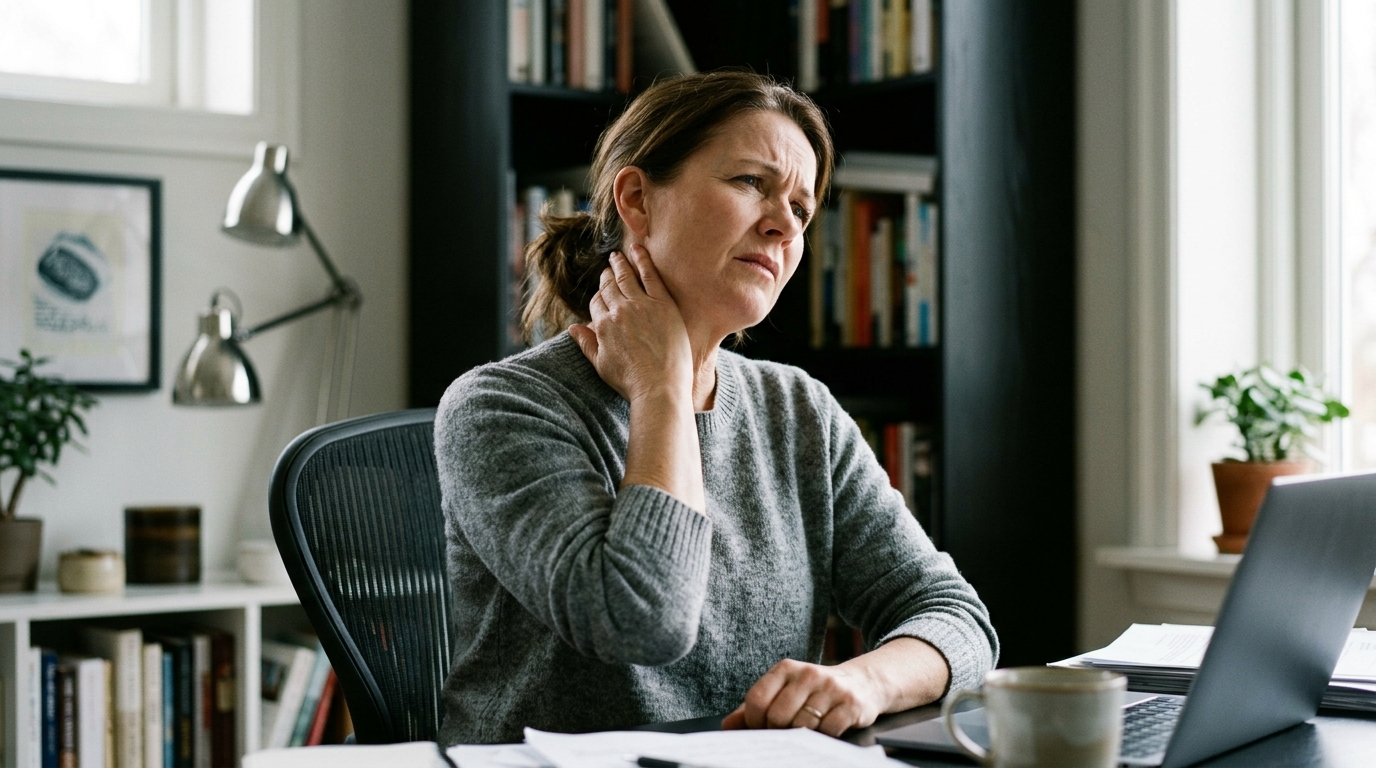
Anatomy and mechanics of cervical neck pain
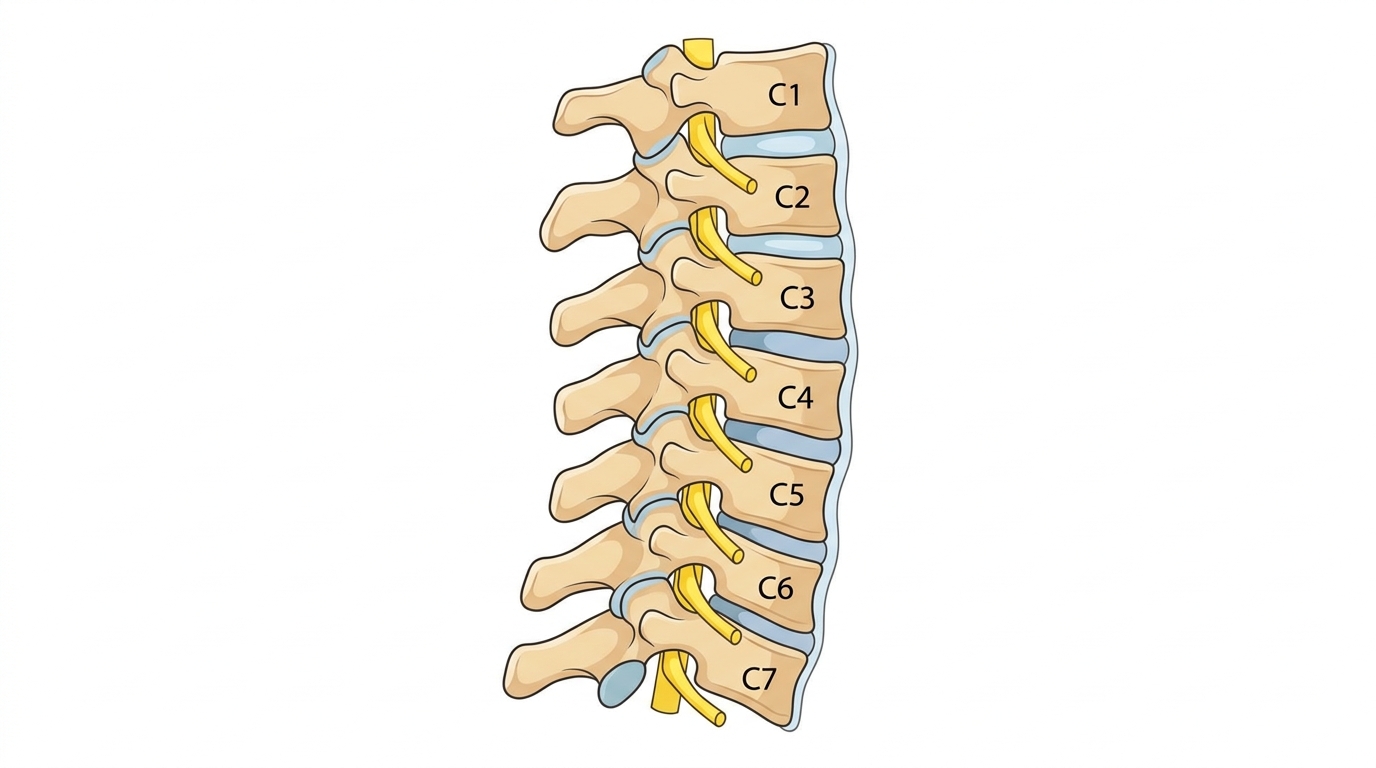
The cervical spine comprises seven vertebrae (C1–C7) supporting the head, protecting the spinal cord, and allowing expansive rotational, bending, and tilting movements. This exceptional mobility leaves the cervical region susceptible to postural fatigue and mechanical strain.
Most episodes of neck pain stem from mechanical factors: prolonged forward head posture (such as screen or smartphone use), facet joint irritation, ligamentous strain, or protective muscle guarding in the upper trapezius and levator scapulae. In older adults, age-related disc degeneration and cervical spondylosis can narrow neural exit foramina.
Identifying whether discomfort originates from joint stiffness, muscular fatigue, or nerve root irritation ensures a rapid and accurate treatment plan.
Common presentations of neck problems
Most mechanical neck pain improves safely with physical therapy, but immediate specialist medical evaluation is essential if you experience:
- Cervical Myelopathy: Progressive clumsiness or loss of dexterity in the hands (dropping objects, difficulty buttoning shirts) accompanied by unsteadiness when walking.
- Vertebrobasilar Insufficiency: Dizziness, sudden fainting spells (drop attacks), double vision, difficulty speaking or swallowing when turning the head.
- Post-traumatic neck pain: Severe pain following high-impact trauma, motor vehicle collision, or fall, especially when accompanied by midline tenderness or neurological deficits.
Evidence-based cervical physiotherapy
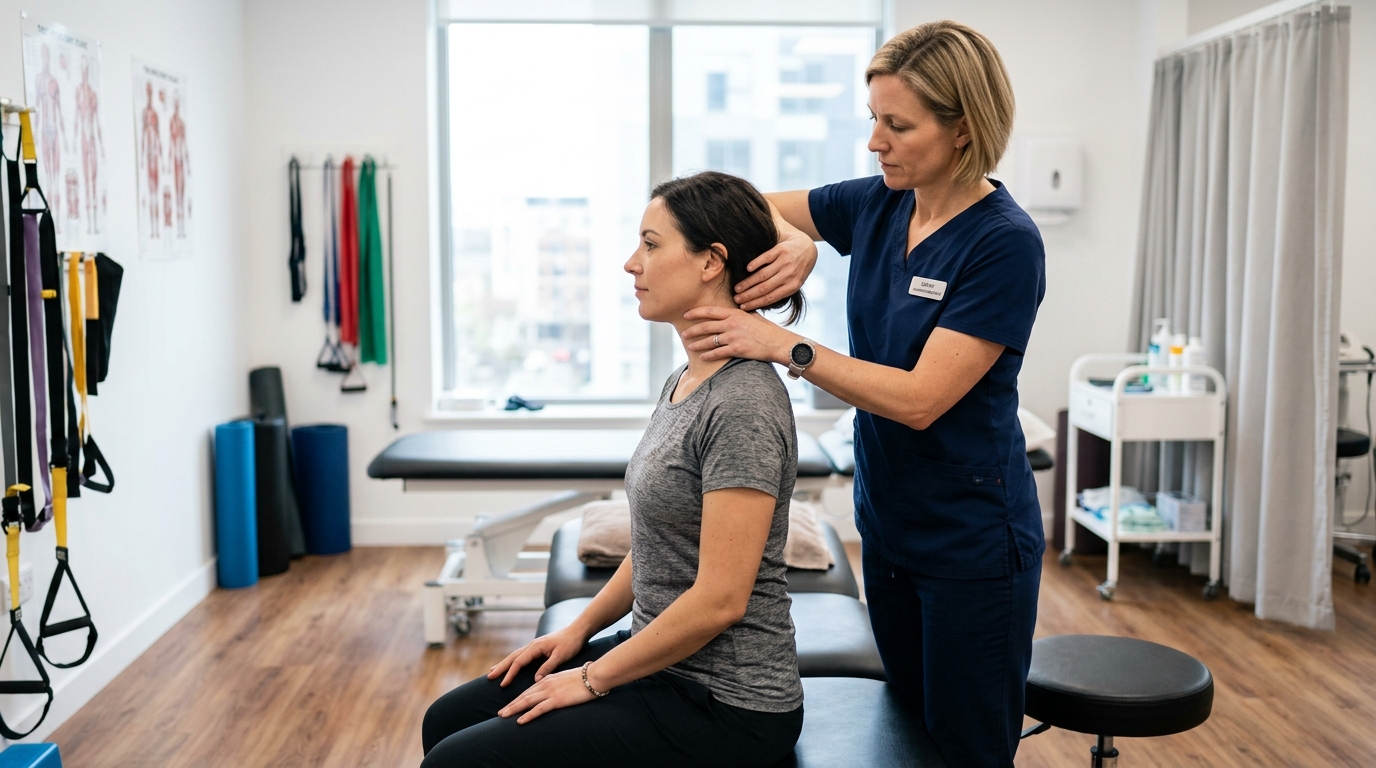
At Dr Waheed Physio, cervical evaluation is led by Dr. Waheed Muhammad, Consultant Physical Therapist at DHQ Teaching Hospital Swabi. Assessment analyzes active cervical mobility, thoracic spine kyphosis, deep neck flexor endurance, and neurological radicular signs (Spurling’s test).
What to expect during neck pain recovery
Most uncomplicated mechanical neck strains and postural muscle spasms show noticeable improvement within 2 to 4 weeks when addressed with active movement and exercise therapy. Recovery is significantly enhanced by taking micro-breaks from sustained device use every 45 minutes, optimizing pillow height to maintain neutral alignment, and performing prescribed neck stability exercises daily.
Explore related spinal and upper extremity conditions
Schedule an expert cervical spine assessment
Consult Dr. Waheed Muhammad, Consultant Physical Therapist at DHQ Teaching Hospital Swabi. Private consultations held at Doctors Medical Center, Jahangira Road, Swabi (3:00 PM – 7:30 PM, Monday to Saturday).